
CoachSuit blog
Published June 24, 2026
How to Price Your Online Coaching Services in 2026
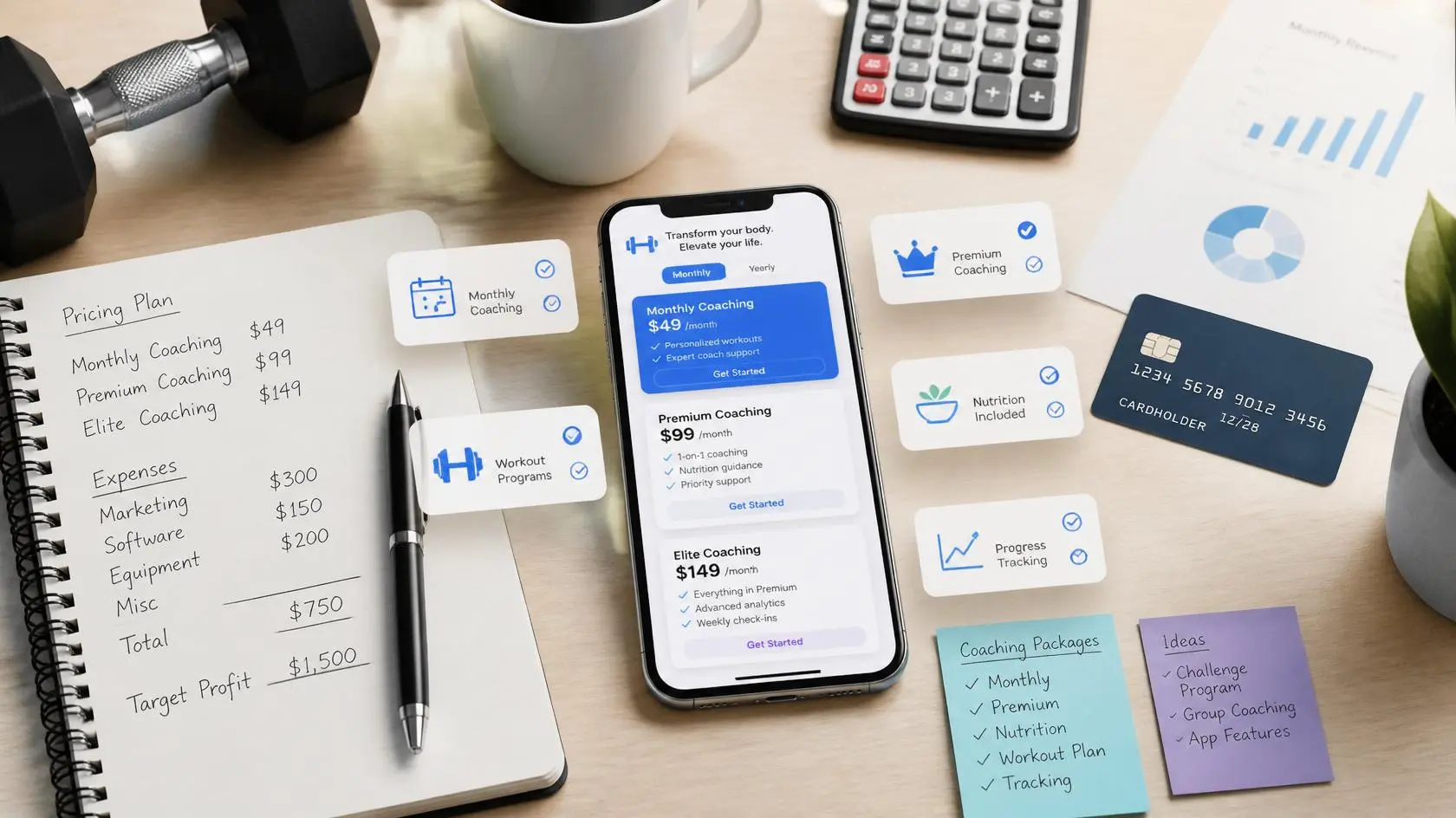
Many coaches choose a price almost randomly. They pick a number that feels affordable, calculate what they once paid for coaching or decide what they hope a client will accept.
Others copy competitors without knowing what those competitors include, how many clients they serve or whether their businesses are profitable. Similar prices can hide completely different levels of support, experience and operating cost.
Pricing is one of the biggest reasons coaching businesses struggle. Charging too little creates a full calendar with weak margins, while unclear packages make it difficult for clients to understand why one service costs more than another.
This guide explains how to price online coaching, calculate a sustainable rate and build profitable coaching packages around real client value. The goal is not to give you one perfect number. It is to help you create a pricing system that works for your clients and your business.
Why Pricing Is More Than Just Choosing a Number
Clients rarely buy workout spreadsheets, check-in messages or minutes on a video call. They buy an outcome: greater strength, better habits, more confidence, improved fitness or a clear plan they can follow. Your price should reflect the complete path you provide toward that result.
Pricing also affects positioning. A very low fee may suggest a basic, self-guided service even when you provide substantial personal support. A higher fee can signal specialist expertise and closer guidance, but only when the experience justifies it.
Cheap does not always sell better. Low pricing can attract people who are less committed, increase churn and force you to manage more clients than you can serve well. It can also leave too little money for software, education, marketing and business improvement.
Premium pricing requires a premium experience. Clear onboarding, organized delivery, reliable communication and visible progress matter as much as the program itself. Price and experience need to tell the same story.
Common Pricing Mistakes Fitness Coaches Make
Charging hourly forever is a common starting point. It is easy to explain, but it ties revenue to your available hours and encourages clients to compare time instead of outcomes. Hourly personal trainer pricing can still make sense for individual sessions, but ongoing online coaching usually includes work that happens outside a call.
Copying competitor pricing is equally risky. You do not know their costs, client capacity, tax position, experience or actual profit. Use competitor research to understand the market, not to outsource your financial decisions.
Unlimited support sounds valuable but creates an undefined workload. Replace it with clear boundaries such as weekday messaging, a stated response window or one scheduled check-in. Boundaries protect delivery quality and help clients know what to expect.
Another mistake is including too many services in every package. Custom training, detailed nutrition guidance, daily messaging, calls and video reviews may look impressive, but each item adds labor. Include features because they help the target client, not because a longer list appears more valuable.
Never increasing prices allows costs and experience to rise while revenue per client stays flat. Trying to compete only on price has the same effect. There will almost always be a cheaper coach, so compete through specialization, clarity, service and results.
Different Online Coaching Pricing Models
A monthly subscription is the most familiar online coaching pricing model. Clients pay each month for ongoing programming, review and support. It creates predictable revenue and supports long-term coaching, but you need retention systems and clear cancellation terms.
A one-time transformation program charges a fixed fee for a defined period, such as eight or twelve weeks. It is easy to market around a goal and deadline. The disadvantage is less recurring revenue, plus pressure to keep finding new cohorts or convert graduates into ongoing support.
Hybrid coaching combines remote delivery with occasional in-person sessions or calls. It can command a higher price because clients receive flexibility and direct contact. Travel, scheduling and uneven service time can make capacity harder to manage.
Premium VIP coaching provides the highest access, customization and accountability. It may include frequent reviews, calls and faster messaging. Strong margins are possible with a small roster, but weak boundaries can turn VIP access into an unsustainable workload.
Group coaching gives several clients a shared program, community and group check-ins. It can lower the price per client while improving revenue per delivery hour. It offers less personalization, so the audience and promised outcome must be specific.
An app-only membership provides programs, an exercise library and self-guided resources with little personal support. It is scalable and accessible, but clients may need stronger onboarding and engagement prompts. Be explicit that app access is not the same as individualized coaching.
How To Calculate Your Coaching Price
Start with your desired monthly income before tax, then add monthly business costs and the profit you want to retain for growth. Costs can include coaching software, payment fees, insurance, education, marketing, contractors and equipment. Taxes vary by location, so calculate them with a qualified local professional rather than treating all revenue as take-home pay.
Next, choose a realistic number of active clients. If your income and business target is $8,000 per month and you can serve 20 clients well, the average revenue needed per client is $400. If the target is $6,000 with 30 clients, the average is $200. This is a planning calculation, not a universal recommendation.
Now measure hours per client. Include program design, check-ins, message replies, calls, progress review, onboarding and admin work. A package that appears to require one hour may actually use three. At $250 per month, three hours of delivery produces about $83 per hour before software, taxes and other costs.
Run a capacity check too. Twenty clients requiring three hours each use 60 hours per month. Add sales, content, finance and operations before deciding the workload is comfortable. Your fitness coaching pricing should leave enough time to deliver well, find future clients and operate the business.
Finally, stress-test the number. Ask what happens if several clients pause, payment fees rise or support takes longer than planned. A sustainable price includes room for normal business variation, not only the best possible month.
What Should Be Included In Coaching Packages
Good online coaching packages are built around a client need, not a random collection of features. A starter service might provide a structured workout plan, clear video demonstrations and basic tracking. A higher-support package might add personalized adjustments, weekly check-ins and closer messaging access.
Common components include workout plans, an organized exercise library, progress tracking, nutrition guidance, habit tracking, weekly check-ins, messaging and community access. A mobile app can bring these elements into a more consistent delivery experience.
Be precise about scope. Explain whether nutrition guidance means educational resources, habit support or individualized planning within your professional qualifications. State messaging days, response times, check-in frequency and how often programs are updated.
Value comes from how the complete experience works together. A long feature list is not automatically valuable. Clients need to know what to do today, how to perform it, when feedback arrives and how progress influences the next decision.
Create tiers by changing support and personalization, not by making the lowest tier intentionally frustrating. Every package should deliver the outcome it promises. Higher tiers can provide more access, faster review or more individual adaptation.
When Should You Raise Your Prices?
Raise prices when demand consistently exceeds your capacity, your client results and testimonials are stronger or your experience allows you to solve a more specific problem. Improved systems, better onboarding and more reliable delivery can also support an increase.
Less available time is another signal. If your roster is full and quality would fall by adding clients, a higher price can protect capacity. Review costs and margins at least annually even if demand feels stable.
Decide whether a change applies only to new clients or to everyone after a notice period. Honor contracts and communicate clearly. Explain the new rate, effective date and any package changes without writing a defensive essay.
Never apologize for increasing prices when the change is fair and transparent. Clients can decide whether the service still fits. Your responsibility is to give adequate notice and continue delivering the agreed standard.
Example Coaching Packages
The table below shows how fitness coaching packages can differ by support and personalization. The prices are examples only. They are not recommendations, and the right numbers depend on your market, costs, experience, scope and client capacity.
Keep package differences easy to explain. If a prospect cannot understand the difference in a few sentences, simplify the offer before adjusting the price.
How Technology Helps You Charge Premium Prices
Software does not make average coaching premium by itself. It can, however, make good coaching easier to understand and use. Professional onboarding gives clients one clear starting point, while organized workout delivery reduces the need to search through old messages and files.
A branded mobile app can connect workout plans, video demonstrations, an exercise library and progress tracking in one place. That consistency supports perceived value because the service feels deliberate from the first login through each weekly review.
Technology can also protect your time. Templates, repeatable onboarding and structured check-ins reduce avoidable admin while preserving personalized decisions where they matter. Better margins should come from a better system, not from removing the support clients were promised.
Choose software based on the experience your packages require. A simple membership may need content access and tracking. Premium coaching may need clearer individual delivery, communication and progress visibility. Compare those needs with the cost before adding another tool.
Pricing Checklist
Use this checklist when creating a new offer or reviewing current online personal trainer pricing. Revisit it whenever delivery, demand or costs change.
- Define the target audience and the outcome they want
- Choose a pricing model that matches how support is delivered
- Set a realistic monthly income and profit target
- Know software, payment, marketing and operating costs
- Estimate taxes with appropriate local professional advice
- Track all time spent on each client, including admin
- Set a client capacity that protects coaching quality
- Build clear packages with meaningful differences
- Define messaging, check-in and response boundaries
- Avoid competing only on price
- Increase value and delivery quality before raising prices
- Review pricing, costs and capacity every year
Where CoachSuit Fits
CoachSuit helps personal trainers and online coaches deliver coaching through a branded mobile app experience. Depending on the selected setup, coaches can organize workout plans, provide an exercise library and give clients a clearer view of recorded progress.
Branding and a white-label app can make delivery feel connected to your business, while consistent mobile access helps clients know where their coaching lives. These tools support the experience behind premium positioning, but your expertise, package design and client results still create the core value.
If you are comparing systems and costs, explore CoachSuit pricing, CoachSuit for personal trainers and the branded mobile app experience. Choose technology only when it supports the service you have promised.
Build a Price Around Sustainable Value
The best answer to how to price online coaching starts with outcomes, costs, capacity and delivery time. Your rate must support good client service and a healthy business at the same time.
Build a small number of clear packages, define boundaries and measure the real work behind each client. Review the numbers as your demand, systems and experience improve. Sustainable pricing gives you the room to coach well.
Online coaching pricing FAQ
- How much should an online fitness coach charge?
- There is no universal rate. Calculate desired income, client capacity, delivery hours, business costs, taxes and profit, then compare the result with the value and positioning of your offer. Market research is useful, but it should not replace your own calculation.
- Should beginners charge less for online coaching?
- Beginners may charge less while building experience and proof, but the price must still cover time and costs. Reduce scope rather than promising premium access at an unsustainable rate, and increase prices as your results, systems and demand improve.
- Should nutrition guidance cost extra?
- It can be included in a higher package or offered separately if it adds meaningful work and falls within your qualifications. Define whether you provide general education, habit coaching or individualized nutrition support, and follow the rules that apply in your location.
- Is monthly pricing better for online coaching?
- Monthly pricing works well for ongoing programming, accountability and recurring support. Fixed-term programs can be better for a defined transformation or cohort. Choose the model that matches the client journey and how you deliver results.
- How often should coaches increase their prices?
- Review pricing at least once a year and whenever demand, costs, expertise, package scope or capacity changes significantly. A review does not require an increase, but it shows whether current rates still support the business.
- Can a branded app increase perceived value?
- Yes, when it makes coaching more organized and professional. A branded app can connect workouts, exercise guidance and progress in one consistent experience. It supports perceived value, but it does not replace coaching quality or client results.
Ready to Build a Premium Coaching Business?
Book a CoachSuit demo to explore how a branded mobile app can support your coaching packages, client delivery and professional experience.
Book a CoachSuit demo