
CoachSuit blog
Published June 8, 2026
How to Sell Workout Programs Online
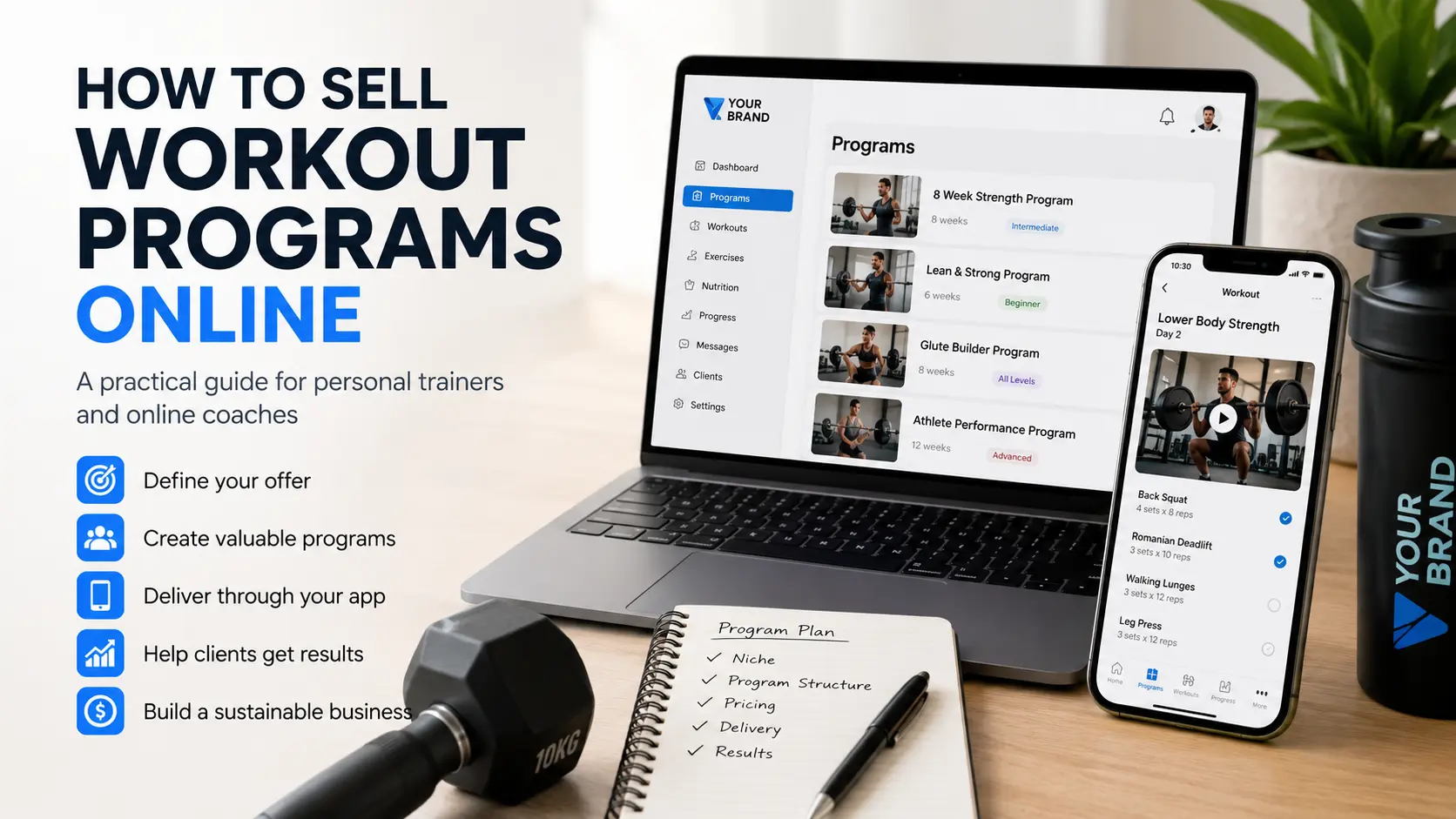
Many personal trainers want to sell workout programs online beyond one-to-one sessions. A well-built program can reach more clients, create repeatable offers and give your coaching knowledge a clearer product shape.
A workout program is easier to sell when the offer is clear, structured and easy to follow. Clients should understand who the program is for, what they receive and how training fits into their week without needing a long explanation from you first.
The challenge is not only creating the program. You also need a professional way to deliver it. How clients access workouts, review exercise guidance and stay organized affects whether they actually use what they bought.
This guide explains how to plan, package, deliver and improve workout programs online. It is written for personal trainers and online fitness coaches who want practical steps, not hype.
Start with a clear target client
Before you write a single workout, decide who the program is for. A workout program should be built for a specific person, goal or training context. Generic programs are harder to position because the client cannot quickly see why it fits them.
When you define the target client first, your exercise choices, session length and language become more focused. You can describe the offer in plain terms instead of trying to appeal to everyone at once.
Examples include beginners returning to training, busy professionals, strength-focused clients, gym members who need structure and remote clients who need guided workouts.
The clearer the target client, the easier it is to write the offer, choose exercises and explain the value. That clarity also helps you decide whether the program should be ready-made, personalized or a mix of both.
Choose the result your program is built around
Every sellable program should have a clear training direction. Clients do not need a promise of guaranteed transformation. They do need to understand what the program is designed to support.
Common directions include building strength, improving consistency, supporting muscle building work, adding conditioning, improving mobility or giving beginners a simple structure.
Be careful with outcome language. A program can support fat loss, strength development or body composition goals, but results depend on execution, consistency, recovery and individual factors you cannot control from a template alone.
Honest positioning builds trust. Describe what the program helps clients work toward and what kind of effort the structure expects.
Decide what type of workout program you want to sell
Online workout programs come in many formats. Some trainers sell a one-time program. Others sell fixed-length blocks such as a 4-week program, 6-week program or 8-week program. You may also create a beginner program, gym-based program, home workout program or a hybrid offer that adapts to different equipment setups.
One important distinction is between ready-made programs and personalized programs. Ready-made programs can be sold repeatedly to clients who fit the same profile. They are useful when you want scalable digital fitness products with a consistent structure.
Personalized programs are adapted to a client's needs, equipment, schedule or training history. They usually require more coach time and often fit a higher-support offer. Many trainers use both models: ready-made programs for repeatable sales and personalized coaching for clients who need more specific guidance.
Your format choice affects workout and program delivery, pricing and support level. If online coaching is part of your business, the program format should match how you want clients to train between check-ins.
Build a structure clients can actually follow
A good online workout program is not just a list of exercises. Clients need a structure they can follow week by week and session by session. They should know what to do, when to do it and how to complete each workout without guessing.
Start with the basics: program length, training frequency and weekly layout. Give workouts clear names so clients can find the right session quickly. Order exercises logically, define sets and reps clearly and add rest guidance where it matters for the training style.
Progression logic helps clients understand how the program develops over time. Exercise alternatives are useful when clients train in different gyms, have limited equipment or need options on lower-energy days. Short notes or instructions can clarify intent without turning every session into a long document.
Use this practical checklist when building the program structure:
- Program length
- Training frequency
- Weekly structure
- Workout names
- Exercise order
- Sets and reps
- Rest guidance where relevant
- Progression logic
- Exercise alternatives where needed
- Notes or instructions
Add exercise guidance so clients are not guessing
Online clients often train without you standing beside them. Exercise names alone may not be enough, especially for less experienced clients or movements that need clearer setup cues.
Video guidance and written instructions help clients understand the intended movement, equipment setup and basic execution cues. This is especially important for remote coaching and repeatable programs where you cannot explain every exercise in real time.
Good exercise video guidance reduces repeated questions and helps clients feel more confident starting a session. It also makes your program feel more complete as a digital product rather than a bare list of sets and reps.
Keep expectations realistic. Exercise guidance supports understanding and consistency. It does not replace live coaching, medical advice or individualized form correction when a client needs hands-on support.
Decide whether nutrition content belongs in your offer
Some workout programs only need training content. Others may include recipes or meal ideas as supporting content that helps clients stay aligned with the overall coaching direction.
Whether nutrition content belongs in your offer depends on your qualifications, market, client expectations and the level of support you want to provide. Not every trainer needs to bundle food content with every program.
If you do include nutrition support, keep the scope clear. Practical recipes and meals can complement training without turning the offer into something you are not qualified or willing to support long term.
CoachSuit supports recipes and meals as nutrition content inside the app. It is not positioned as meal plan generation, calorie tracking or macro tracking. Match your offer to what you can deliver consistently.
Choose how clients will receive the program
How you deliver the program shapes the client experience as much as the workouts themselves. Trainers commonly use PDFs, messages or an app. Each option has trade-offs.
PDFs are easy to create and send. They work for simple or static content, but they can feel static and become harder to update once clients save older versions locally.
Messages through WhatsApp, email or similar tools feel personal and familiar. They are quick for short updates, but important content can get buried and become harder to organize over time.
An app can feel more structured and professional. Workouts, guidance and progress can stay in one place, which is useful when you want clients to follow a program without searching through files and chat history.
If mobile delivery matters to your offer, review how a fitness mobile app or branded fitness app could support workout program delivery. For a broader comparison of delivery methods, see Online Coaching App vs PDFs and WhatsApp.
Make your offer easier to understand
Clients buy clarity as much as they buy workouts. A strong program offer should answer the questions they have before they purchase.
Who is the program for? What does the client receive? How long does it last? How often should they train? What equipment is needed? Is it ready-made or personalized? Does it include exercise guidance? Are check-ins or progress reviews part of the offer? How is the program delivered after purchase?
When these details are easy to find, you reduce confusion and support better buying decisions. That does not mean your sales page needs to be long. It means the offer itself should be specific enough that the right client recognizes it quickly.
If you are still refining your delivery setup, How to Choose a Personal Trainer App can help you think through client experience and app selection without assuming you need every possible feature on day one.
Price the program based on value and delivery scope
Pricing depends on support level, personalization, program length, brand positioning, audience expectations and the delivery experience you provide. A fully personalized coaching program is usually priced differently from a ready-made downloadable program with minimal ongoing support.
Avoid pricing only based on workout count. Two programs with the same number of sessions can deliver very different value depending on guidance quality, delivery method, branding, check-ins and how easy the client journey feels.
More support usually means more operational work for you. That is not a reason to overprice, but it is a reason to price intentionally. A program that includes regular review, personalization or a polished branded experience may justify a different price than a simple static plan.
Review your commercial options alongside delivery scope. Pricing and launch options can help you think about how branded app delivery fits your business model without treating price as the only decision factor.
Create a client experience that feels professional
Clients judge the experience, not only the workout plan. Even strong programming can feel disappointing if delivery is messy, files are hard to find or the offer looks unrelated to the trainer's brand.
A program is easier to follow when everything is organized. Clear naming, consistent structure and a delivery method that keeps workouts and guidance connected all support better client use.
Branding can make the offer feel more consistent. When clients open a personal trainer app or branded mobile experience that reflects your logo, colors and visual identity, the program feels more connected to your business.
Professional presentation does not require hype. It requires intention. Clients should feel that buying your program gives them a clear, reliable way to train.
Track what happens after the program starts
Selling the program is only one step. After a client starts, you need a practical way to understand whether they are following the plan and where they may need support.
Recorded progress and training history can help organize the client journey. Client progress tracking makes it easier to review completed workouts, logged activity and meaningful signals over time.
Progress visibility does not guarantee results. It can, however, support better organization, clearer check-ins and more useful conversations about consistency. That is especially helpful when you sell fitness programs online to remote clients who train independently.
Choose tracking that fits your coaching rhythm. A simple ready-made program may need less visibility than a personalized offer with regular review calls.
Workout program offer checklist
Use this checklist before you publish or sell a program. It helps you confirm that the offer, structure and delivery method are aligned.
- Target client
- Main training goal
- Program length
- Training frequency
- Equipment requirements
- Workout structure
- Exercise guidance
- Nutrition content if included
- Progress visibility
- Delivery method
- Support level
- Pricing model
- Branding and presentation
Common mistakes when selling workout programs online
Many trainers create useful programs but lose momentum because the offer or delivery setup creates friction. These mistakes are common and usually fixable.
- Selling a generic program to everyone instead of defining a clear target client
- Making the program too complicated with too many variations, rules or files
- Giving clients too many separate files instead of one organized delivery experience
- Not explaining who the program is for and what level of experience it assumes
- Not showing how workouts should be performed when clients train alone
- Ignoring the client experience and focusing only on the workout content itself
- Using a delivery method that becomes hard to manage as client numbers grow
- Promising guaranteed results instead of describing what the program supports
Where CoachSuit fits
CoachSuit is designed for personal trainers, online coaches and gyms that want a branded mobile app experience for delivering selected fitness content. Depending on the modules you choose, it can support workouts, programs, exercise guidance, recipes and recorded progress inside one client-facing app.
For trainers who want to sell fitness programs online with a more structured delivery experience, a branded app can keep workouts, guidance and progress in one place instead of scattered files and messages. CoachSuit for personal trainers and the wider online coaching platform direction are built around that use case.
CoachSuit includes initial design personalization and launch support, with ongoing maintenance and priority support available through CoachSuit Club. A typical launch takes 2-4 weeks depending on modules, content preparation and feedback speed.
CoachSuit may not be necessary for someone who only needs a simple PDF download or a fully manual setup. If you want to explore whether a branded app fits your program delivery model, you can book a free demo to discuss modules, branding direction and launch options.
Final takeaway
Learning how to sell workout programs online requires more than writing workouts. You need a clear audience, a clear offer, a structured program and a delivery system clients can actually use.
The better the client experience, the easier it is for clients to understand and follow the program. That includes how workouts are organized, how exercise guidance is presented and how clients access support information.
A branded app can help when you want a more professional and structured delivery experience, especially for repeatable online workout programs or remote clients who train independently.
Start with clarity, build structure into the program itself and choose delivery that matches the level of support you want to provide. That foundation makes it easier to improve the offer over time.
Selling workout programs online FAQ
- Can personal trainers sell workout programs online?
- Yes. Personal trainers can package workout programs for online delivery, but the offer should be clear, structured and easy for clients to follow. The delivery method also matters because clients need access to the right workouts, guidance and support information.
- What should an online workout program include?
- An online workout program should usually include a clear goal, weekly structure, workout sessions, exercise order, sets, reps and guidance that helps clients understand what to do. The exact structure depends on the trainer's offer and target client.
- Is a PDF enough to sell workout programs online?
- A PDF can work for simple or static programs. As the offer becomes more structured, trainers may need a better delivery experience where workouts, exercise guidance and progress visibility are easier to organize.
- Can I sell ready-made and personalized programs?
- Yes. Many trainers use ready-made programs for repeatable offers and personalized programs for clients who need a more specific coaching experience. The right model depends on your business and support level.
- Can CoachSuit help deliver workout programs?
- CoachSuit can support workout and program delivery through a branded mobile app experience. Depending on the selected modules, it can also include exercise guidance, recipes and meals, and recorded progress visibility.
- Does CoachSuit process payments for workout programs?
- Payment processing is not presented as a verified standard capability on this site. CoachSuit focuses on the branded app experience for delivering selected fitness content and supporting the client journey.
Ready to deliver workout programs through a branded app?
Book a free CoachSuit demo to discuss your coaching model, app modules, branding direction and launch options.
Book a free demo