
CoachSuit blog
Published June 10, 2026
Best Way to Deliver Workout Programs to Clients Online
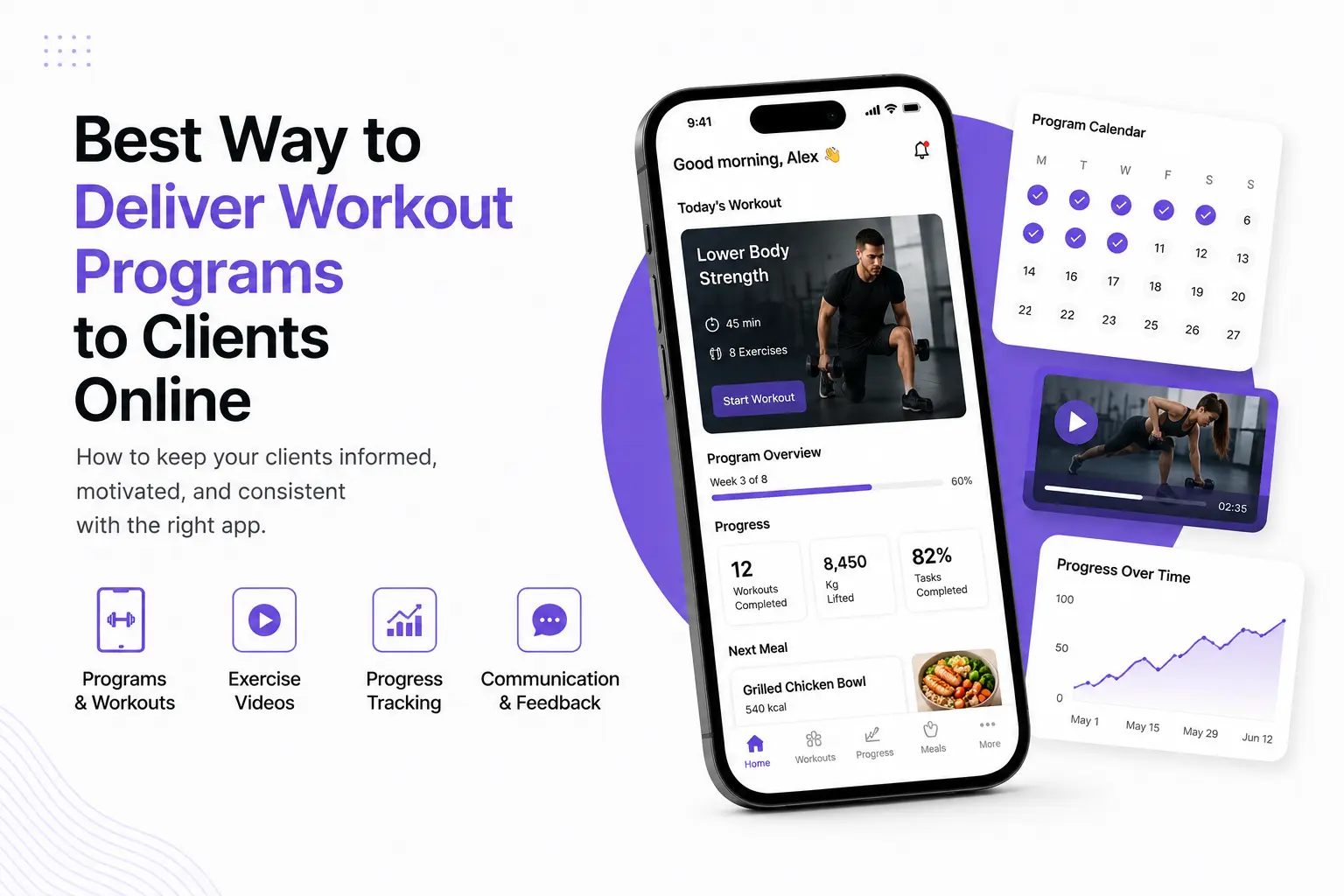
Many personal trainers and online coaches can write strong workout programs, but delivery is where the client experience often breaks. A good plan on paper does not help much if the client cannot find the right session, understand the exercises or know what to do next.
If clients cannot follow the program clearly, consistency drops and coaching conversations start repeating the same instructions. The problem is usually not the programming itself. It is how the program reaches the client and stays organized over time.
The best way to deliver workout programs to clients online depends on your coaching model, client type, program structure and support level. A method that works for a simple downloadable guide may not work for ongoing remote coaching with regular check-ins.
This guide compares PDFs, spreadsheets, messages and app-based delivery so you can choose a workout program delivery approach that fits your offer and your clients.
Why workout program delivery matters
A workout program is only useful if the client can follow it. Strong exercise selection matters, but it only creates value when the client can access the right workout at the right time.
Delivery affects clarity, consistency and client confidence. Good delivery helps clients know what to do today, what comes next and how to revisit exercise guidance when they need a reminder.
Poor delivery can make even a well-written program feel confusing. Clients may save files in the wrong folder, lose message threads or open outdated versions without realizing it.
The delivery system should support the coaching offer, not replace the coach. Whether you use files, spreadsheets, messages or workout program delivery through an app, the goal is to make the program easier to follow.
For wider business context, see How to Sell Workout Programs Online. A structured personal trainer app often becomes relevant when manual delivery starts creating friction.
What clients need from an online workout program
Before comparing delivery tools, it helps to define what clients actually need from online workout programs.
Clients usually need a clear weekly structure, readable workout names and order, exercise details with sets and reps, and video or written guidance when they train alone. Progress visibility and mobile access matter because many clients review workouts on their phone.
Most importantly, the client should always know the next step. They should not have to search through old messages to find today's workout or ask you to resend the same file every week.
- Clear weekly structure
- Workout names and order
- Exercise details with sets and reps
- Video or written guidance
- Progress visibility
- Easy mobile access
- A clear next step
Option 1: Delivering workout programs with PDFs
PDFs remain a common way to deliver workout programs online. They are familiar, easy to create and simple to send as a one-time download.
PDFs work well for simple static programs, one-time guides, downloadable resources, lead magnets and simple program previews.
The limitations appear when programs need updates or connected guidance. PDFs are harder to update after sending, files can get lost and they are not interactive. They do not naturally connect exercise videos, progress logging or nutrition content in one flow.
PDFs are not bad. They are useful for the right use case, especially entry-level offers or free resources while you reserve structured delivery for paying clients.
Option 2: Delivering workout programs with spreadsheets
Spreadsheets appeal to coaches who like manual control and flexible structure. Google Sheets or Excel can hold detailed program planning that you can edit quickly.
They work well for flexible structure and detailed planning with a small number of clients. The client experience is where spreadsheets often struggle. They are not always client-friendly on mobile and can look less professional as a client-facing product.
Progress may also sit in separate tabs or informal notes rather than one organized client journey. Spreadsheets can still be a practical internal planning tool even when you deliver the final program another way.
Option 3: Delivering workout programs through messages
WhatsApp, email and similar tools are fast for communication. Many trainers start here because messages feel personal and clients already use them daily.
Messages work well for quick communication, direct support and simple updates. The limitations show up as client numbers grow. Content gets buried, workouts mix with normal conversation and exercise explanations get repeated.
Clients may miss important instructions if they do not scroll back through long threads. For a deeper comparison, read Online Coaching App vs PDFs and WhatsApp.
Option 4: Delivering workout programs through an app
A workout program app can centralize the client experience. Clients open one place for workouts, guidance and recorded progress instead of searching through files and messages.
An app can keep online workout programs, exercise guidance, nutrition content if included and progress visibility in a mobile-friendly flow. A branded fitness app can make delivery feel more connected to your business.
Apps are not automatically the best option for every trainer. They make more sense when you need structure, repeatability and a clearer client journey than files and messages provide.
Setup requires effort. If you only need a one-page PDF, a full app may be more than you need. If you deliver structured programs to remote clients regularly, a fitness mobile app may fit better. See Personal Trainer App Features for a feature-level view.
Workout program delivery methods compared
Use this table as a quick reference when comparing delivery options. Each method has a place depending on your offer and how much structure your clients need.
Program structure: what your delivery system should support
Whatever delivery method you choose, the system should help organize program length, training frequency, workout days, exercise order, sets and reps, exercise notes and progression logic.
Client-facing instructions should sit close to the workout, not in a separate document the client may never open. The goal is to make the program easy to follow, not overly complex.
Structured workout program delivery inside an app can keep these elements connected. Manual methods can work too if you maintain consistent formatting every time you send an update.
Exercise guidance: helping clients understand the plan
Clients often need more than exercise names. Even familiar movements can require setup reminders, tempo notes or alternatives when equipment is unavailable.
Video guidance and written instructions help clients understand what to do when they train outside in-person sessions. This is especially important for remote clients, travelers and anyone following online workout programs independently.
Guidance should stay close to the workout. If clients have to leave the session and hunt through separate links, the delivery experience creates friction and support messages increase.
Keep expectations realistic. Exercise video guidance supports understanding and consistency. It does not replace live form correction, injury prevention advice or medical safety guidance.
Good guidance reduces repeated explanations and helps clients feel more confident starting a session. That supports the program, but it does not guarantee technique perfection on its own.
Progress visibility: knowing what happened after delivery
Delivery does not end when the client receives the program. Trainers still need a practical way to understand whether clients completed workouts and how training is progressing between check-ins.
Recorded progress can include training history, completed workouts, logged activity or logged weight depending on the platform and your coaching model. Even simple completion visibility can support better conversations.
Progress visibility helps with organization and accountability. It does not guarantee results, retention or transformation. Outcomes still depend on client effort, recovery, consistency and factors outside any delivery tool.
Useful client progress tracking should connect back to the program rather than sit in a disconnected dashboard. If you review progress during check-ins, the delivery method should make that review straightforward.
Manual check-ins through messages can work for small client bases. As programs and client numbers grow, recorded progress inside the delivery system often saves time.
Nutrition content: should it be part of workout delivery?
Some coaches keep nutrition separate from workout delivery. Others include recipes or meal ideas as supporting content that stays close to the training experience.
The right approach depends on your qualifications, scope and offer. If nutrition is not part of what you provide, you do not need to bundle food content into every program delivery workflow.
When nutrition is included, keep the scope clear. Practical recipes and meals can complement training without turning the offer into detailed diet tracking.
CoachSuit supports recipes and meals as nutrition content inside the app. It is not presented as meal plan generation, macro tracking or calorie tracking. Match delivery to what you actually provide consistently.
Branded delivery: why presentation matters
Clients judge the experience, not only the workout plan. Two programs with similar exercises can feel very different depending on how they are packaged and delivered.
A branded experience can make the program feel more connected to your business. Logo, colors and visual identity signal that the client is inside your coaching environment rather than opening generic files or third-party tools.
Branding matters most when you sell premium coaching, repeatable online programs or offers where the client rarely meets you in person. In those cases, delivery presentation carries more of the professional impression.
A white-label fitness app is one way to create that connected experience on mobile. Branding does not replace good programming, but it can support trust and consistency in digital fitness coaching.
How to choose the best delivery method for your coaching model
There is no single answer that fits every coach. The best delivery method depends on how you work and how much structure your clients need.
In-person trainers may need workouts for clients to follow between sessions, with exercise guidance and progress visibility. Online coaches usually need structured program delivery, strong mobile access, exercise videos and progress visibility.
Hybrid coaches need both in-person support and digital follow-through. Program sellers need a clean way to deliver repeatable programs with clear onboarding and professional presentation.
If online delivery is central to your business, review how an online coaching platform supports your model before choosing tools based on habit alone.
Workout program delivery checklist
Use this checklist when planning a new program or reviewing your current delivery workflow. It helps confirm that structure, guidance and client experience align.
- Clear target client
- Program length
- Training frequency
- Weekly structure
- Workout names
- Exercise order
- Sets and reps
- Exercise guidance
- Client instructions
- Mobile access
- Progress visibility
- Nutrition content if included
- Branding and presentation
- Launch and support process
Where CoachSuit fits
CoachSuit is built for trainers, online coaches and gyms that want a branded mobile app experience for delivering selected fitness content. Depending on modules, it can support workouts, programs, exercise guidance, recipes, meals and recorded progress inside one client-facing app.
It can help create a more structured delivery experience than scattered files and messages. That can be useful when clients need a clear place to follow training, review guidance and stay connected to the program between sessions.
CoachSuit is useful when trainers want a client-facing app under their brand rather than a generic content-sharing workflow. CoachSuit for personal trainers and the wider online coaching platform direction focus on that use case.
It may not be necessary for someone who only needs a simple PDF download or manual spreadsheet workflow. In those cases, a full branded app may be more than you need right now.
CoachSuit includes initial design personalization and launch support, with ongoing maintenance and priority support available through CoachSuit Club. A typical launch takes 2-4 weeks depending on modules, content preparation and feedback speed. Review pricing and launch options or book a free demo to discuss your delivery model.
Final takeaway
There is no single best delivery method for every coach. PDFs, spreadsheets and messages can work well for simple use cases, early-stage offers and highly personal workflows with a small client base.
App-based delivery makes more sense when you want structure, mobile access, exercise guidance, progress visibility and brand consistency in one client experience. That is often true for online coaches, program sellers and trainers scaling beyond fully manual delivery.
The best system is the one clients can actually follow. Compare options against your coaching model, then choose delivery that supports clarity, consistency and the client journey you want to provide.
Workout program delivery FAQ
- What is the best way to deliver workout programs to clients online?
- The best method depends on your coaching model. PDFs and spreadsheets can work for simple programs, while an app is better suited when you need structured delivery, mobile access, exercise guidance and progress visibility.
- Can I deliver workout programs with PDFs?
- Yes. PDFs are useful for static guides, simple programs and downloadable resources. They become less practical when programs need updates, exercise guidance, progress visibility or ongoing client interaction.
- Are spreadsheets good for online workout programs?
- Spreadsheets can be useful for planning and flexibility, but they may not be the easiest experience for clients on mobile. They can work well for coaches who prefer a manual system.
- Why use an app to deliver workout programs?
- An app can keep workouts, programs, exercise guidance and recorded progress in one mobile experience. This can make the client experience more organized than scattered files and messages.
- Can CoachSuit deliver workout programs online?
- CoachSuit can support workout and program delivery through a branded mobile app experience. Depending on selected modules, it can also include exercise guidance, recipes and meals, and recorded progress visibility.
- Does CoachSuit handle payments for programs?
- Payment processing is not presented as a verified standard capability on this site. CoachSuit focuses on the branded app experience for delivering selected fitness content and supporting the client journey.
Ready to deliver workout programs through a branded app?
Book a free CoachSuit demo to discuss your coaching model, app modules, branding direction and launch options.
Book a free demo