
CoachSuit blog
Published June 10, 2026
Branded Fitness App vs Generic Coaching App: Which One Makes More Sense?
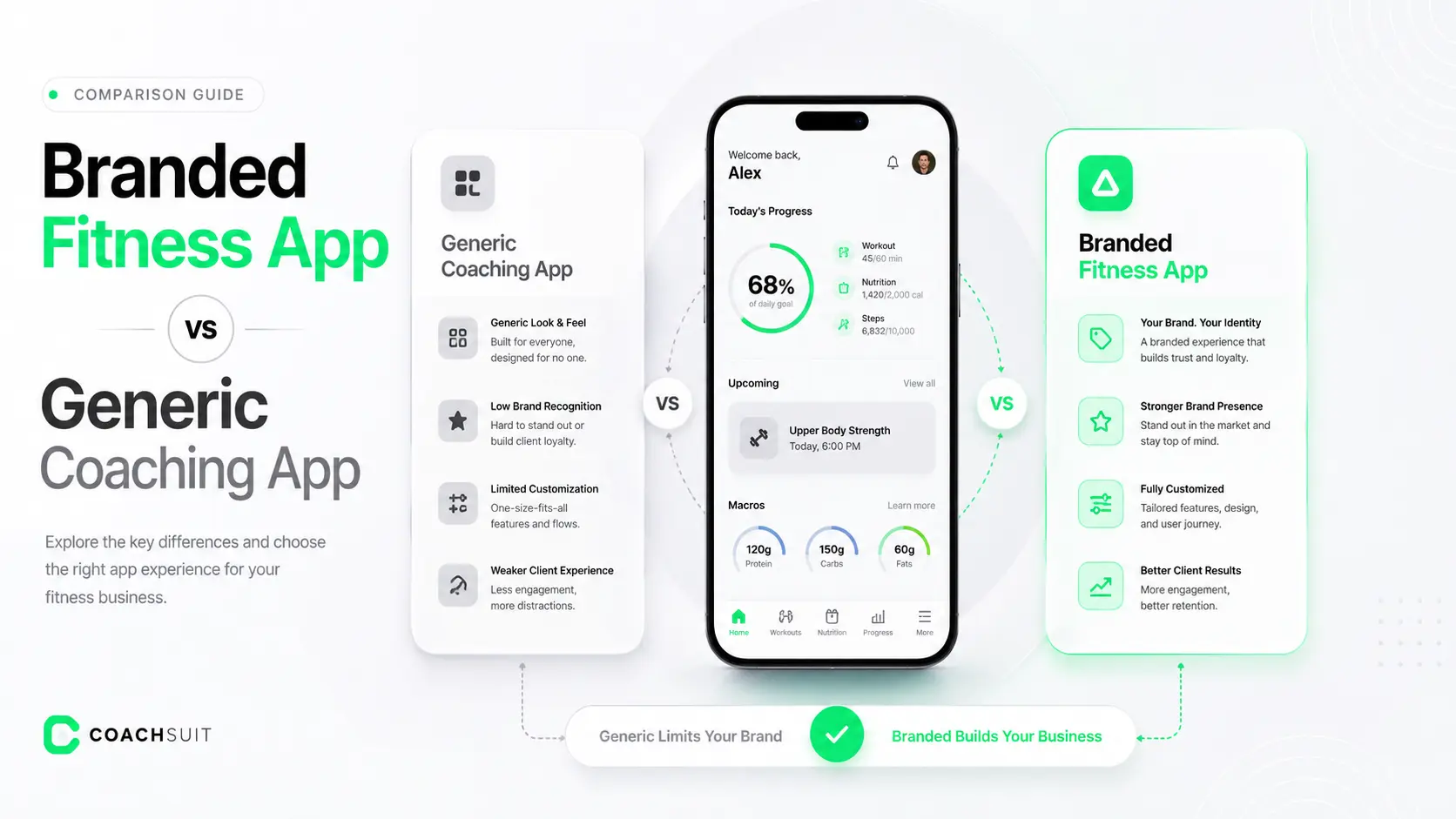
Many personal trainers, online coaches and fitness business owners start by looking for an app to deliver workouts, programs and client content. The search often begins with feature lists, pricing pages and product demos.
The choice is not only about features. Two coaches can use similar tools and still create very different client experiences depending on how content is delivered and how much the app reflects their brand.
The real question is whether you need a simple shared tool or a branded client experience that feels connected to your coaching business. That distinction matters more as your offer becomes clearer and clients expect a consistent way to follow training between sessions.
This article compares branded fitness apps and generic coaching apps so you can choose based on your business stage, coaching model and what your clients actually need from the mobile experience.
What is a generic coaching app?
A generic coaching app is usually a platform where many coaches use the same core product. You create an account, add your content and invite clients into a shared system that other trainers also use.
These platforms can be fast to start with. Depending on the provider, they may include useful tools for workouts, client management and communication. For coaches who want to begin delivering content quickly without a long setup period, that speed can be a real advantage.
The trade-off is often brand experience. Clients may see the platform's identity more clearly than yours. Your name might appear inside the tool, but the overall experience can still feel like a borrowed product rather than an extension of your business.
Generic coaching apps are not inferior tools. They are practical options when you need functional delivery, a limited budget or a way to test an early offer before investing in a more branded setup.
What is a branded fitness app?
A branded fitness app is a mobile app experience personalized around a coach, trainer, gym or fitness business brand. Instead of clients opening a shared platform, they interact with an app that reflects your logo, colors and visual identity.
That branding can make the client experience feel more connected to your business. Workouts, programs and supporting content live inside an environment that looks and feels like part of your coaching offer rather than a third-party tool you happen to use.
The exact level of branding depends on the provider and commercial scope. Some setups focus on visual identity and selected content modules. Others may offer broader configuration within confirmed package limits. Always clarify what branding includes before you assume full control.
A branded app is still a fitness mobile app at its core. The difference is how intentionally the experience represents your business on iOS and Android, not whether clients use a phone to access training content.
The biggest difference is the client experience
Trainers often compare apps by admin features. Clients care about finding today's workout, understanding exercises and knowing what comes next.
A generic coaching app may work well for basic delivery. A branded coaching app can make the same content feel more intentional when the app reflects your visual identity.
The better choice depends on how much the client-facing experience matters to you. For a broader view of what a dedicated personal trainer app can support, see how your delivery model shapes client expectations.
Generic coaching apps: when they make sense
Generic apps can be the right fit in several common situations. They are especially useful when speed, simplicity and low upfront commitment matter more than brand presentation.
A generic tool can be a good early step before building a more branded experience. Many coaches start here, refine their offer and move to a branded app when the business model and content are ready.
- You are just starting and still testing your niche or offer format
- Your offer is simple and does not require a premium client-facing presentation yet
- You want a quick setup without preparing extensive brand assets
- Your client base is small and manual follow-up is still manageable
- Branding is not a major priority at your current business stage
- You need basic workout delivery without a long launch timeline
- Your budget or timeline is limited and a shared platform fits better
Branded fitness apps: when they make sense
A branded fitness app tends to make more sense when your coaching business has enough structure to benefit from a more intentional mobile experience. The investment in setup usually pays off in clarity rather than in automatic business growth.
If you are comparing platforms at this stage, an online coaching platform with branded mobile delivery may fit better than a generic shared tool. A white-label fitness app can also be a practical middle ground between generic tools and fully custom development.
- You have a clear offer clients can understand quickly
- You want a professional client-facing experience on iOS and Android
- You deliver repeatable programs to multiple clients
- You work with remote or hybrid clients who need mobile access between sessions
- You want stronger brand consistency across touchpoints
- You want workouts, guidance, recipes and progress in one branded experience
- You are ready to prepare content, brand assets and onboarding materials
Workout delivery: generic tool vs branded app
Workout delivery is often the first reason coaches search for an app. Both generic and branded options can support program delivery, but the client experience can feel different even when the underlying content is similar.
A generic coaching app may support workout delivery through shared platform structures. That can be fast to use and sufficient when clients only need access to plans. The experience may feel less connected to your identity because clients navigate a layout designed for many coaches.
A branded app can present workout program delivery under your visual identity. Programs can be organized into weeks and sessions inside an experience that reflects your business, which may support a clearer client journey when structured well.
Neither option replaces good programming. The question is whether clients should follow your plans inside a shared tool or inside a mobile experience that feels like part of your coaching brand. For related context, Personal Trainer App Features explains what coaches often evaluate when comparing delivery tools.
Exercise guidance: platform content vs branded coaching experience
Exercise guidance should be easy for clients to revisit when they train alone. Generic apps may support video guidance depending on the platform.
A branded app can place exercise video guidance inside a more personalized coaching experience. Videos and cues stay closer to the workout the client is doing.
Exercise guidance in an app does not replace hands-on coaching or live form correction. The goal is to reduce confusion and keep reference material close to the workout flow.
Nutrition content: does it fit the offer?
Nutrition support varies widely between coaches. Some trainers focus only on training and do not include nutrition content. Others share recipes, meal ideas or practical food guidance as part of the coaching relationship.
A generic app may or may not match your nutrition workflow. Some platforms include nutrition modules. Others treat food content as an add-on or leave it out entirely. The fit depends on what you actually deliver, not what a feature list suggests you should offer.
A branded app can keep approved nutrition content closer to training content when that module is included. Recipes and meals inside the same app can make the overall experience feel more connected for clients who receive both training and food support.
CoachSuit supports recipes and meals as nutrition content inside the app. It is not positioned as a meal plan generator, macro tracker or calorie tracking tool. If your nutrition support is practical guidance and food ideas, in-app recipes and meals may fit without adding complexity clients do not need.
Progress tracking and accountability
Progress visibility helps organize what clients have completed and how training is going over time. It supports better check-in conversations and gives both you and your clients a clearer view of activity between sessions.
A generic coaching app may include progress tools depending on the platform. The value depends on whether recorded data is easy to review and whether clients actually use the logging features you enable.
A branded app can connect client progress tracking to the coach's overall client experience. When progress history lives inside the same branded environment as workouts and guidance, clients may find it easier to stay oriented.
Progress tracking supports organization and accountability, but it does not guarantee results. The benefit is clarity and structure, not a promise that one metric alone will define client outcomes or retention.
Branding: why it matters more as the business grows
In the early stage, many coaches only need functional delivery. As the business grows, presentation and consistency often matter more.
A branded experience can make the app feel like part of your business, not a borrowed tool. Branding can include logo, colors, visual identity and the overall app experience.
Branding alone does not guarantee trust, retention, revenue or growth. It is one part of a broader client experience that still depends on clear offers, good content and consistent support.
Custom app vs white-label fitness app vs generic app
The choice is not only between generic and branded. Coaches often compare three broad paths, each with different trade-offs around speed, control and responsibility.
A generic coaching app offers a fast start and a shared platform experience with less brand control. It fits early-stage delivery and simple offers well.
A white-label or branded app offers a more brand-focused client-facing identity, usually faster than building from zero. The white-label fitness app for trainers guide explains what that path typically includes and what it does not automatically mean.
A fully custom app offers more control when budget and timeline allow, but it comes with higher complexity. You take on more responsibility for design, development, testing, publishing and maintenance. That path makes sense for some businesses, but it is not required for every coach who wants a branded mobile experience.
Questions to ask before choosing an app
Before you commit to a generic coaching app or a branded fitness app, ask practical questions about your offer, content and client expectations. How to Choose a Personal Trainer App walks through a similar evaluation process in more detail.
Use this checklist when comparing providers, reviewing product pages or preparing for a sales conversation. If you are still delivering through files and messages, Online Coaching App vs PDFs and WhatsApp compares that workflow with app-based delivery.
- Is my offer already clear?
- Do I need basic delivery or a branded experience?
- How important is my logo, colors and visual identity?
- Will clients use the app weekly?
- Do I deliver repeatable programs?
- Do I need exercise video guidance?
- Do I include recipes or meals?
- Do I need recorded progress visibility?
- Do I need iOS and Android support?
- What setup support is included?
- What ongoing support is included?
- What does the commercial agreement say about branding and ownership?
Branded fitness app vs generic coaching app
This table summarizes practical differences trainers often review when deciding between a generic coaching tool and a branded fitness app experience. Use it as a starting point, then compare specific providers against your coaching model.
Where CoachSuit fits
CoachSuit is built for trainers, online coaches and gyms that want a branded mobile app experience. Depending on selected modules, it can support workouts, programs, exercise guidance, recipes, meals and recorded progress inside one app personalized around your logo, colors and visual identity.
CoachSuit includes iOS and Android publishing support, initial design personalization and launch support, with ongoing maintenance and priority support available through CoachSuit Club. A typical launch takes 2-4 weeks depending on modules, content preparation and feedback speed.
CoachSuit may not be necessary for someone who only needs a simple tool to test an early offer. If you want a structured branded experience, explore CoachSuit for personal trainers, the online coaching platform direction, pricing and launch options or book a free demo.
Final takeaway
There is no single best choice for every coach. Generic coaching apps and branded fitness apps solve different problems at different business stages.
Generic apps are useful when you need a simple and fast starting point, a small client base or a way to test an offer before investing in branding. They can deliver workouts and basic client content without a long setup period.
Branded fitness apps make more sense when you have a clearer offer, deliver repeatable programs and want a stronger client-facing brand experience on mobile. The setup requires more planning, but the client journey can feel more connected to your business.
The best choice depends on your business stage, content readiness, client expectations and delivery model. Compare what you deliver today with what you want clients to experience tomorrow, then choose the path that supports that goal honestly.
Branded fitness app vs generic coaching app FAQ
- What is the difference between a branded fitness app and a generic coaching app?
- A generic coaching app usually gives many coaches access to the same platform experience. A branded fitness app is personalized around your logo, colors and visual identity so the client experience feels more connected to your business.
- Is a generic coaching app enough for personal trainers?
- A generic coaching app can be enough when the offer is simple, the coach is early-stage or branding is not a priority. A branded app makes more sense when the coach wants a more professional and consistent client-facing experience.
- Does a branded fitness app mean I own the source code?
- Not automatically. A branded or white-label app usually refers to a personalized app experience, not full source code ownership. Ownership and usage terms should be confirmed in the commercial agreement.
- Can a branded app help with online coaching?
- Yes. A branded app can support online coaching by organizing workouts, programs, exercise guidance, recipes, meals and recorded progress in a mobile experience, depending on selected modules.
- Can CoachSuit be used as a branded fitness app?
- CoachSuit provides a branded mobile app experience personalized around your logo, colors and visual identity. Depending on selected modules, it can support workouts, programs, exercise guidance, recipes, meals and recorded progress.
- How long does a CoachSuit launch take?
- A typical CoachSuit launch takes 2-4 weeks, depending on selected modules, content preparation and feedback speed.
Ready to compare branded app options for your coaching business?
Book a free CoachSuit demo to discuss your coaching model, app modules, branding direction and launch options.
Book a free demo