
CoachSuit blog
Published June 10, 2026
White-Label Fitness App for Trainers: What It Means and When It Makes Sense
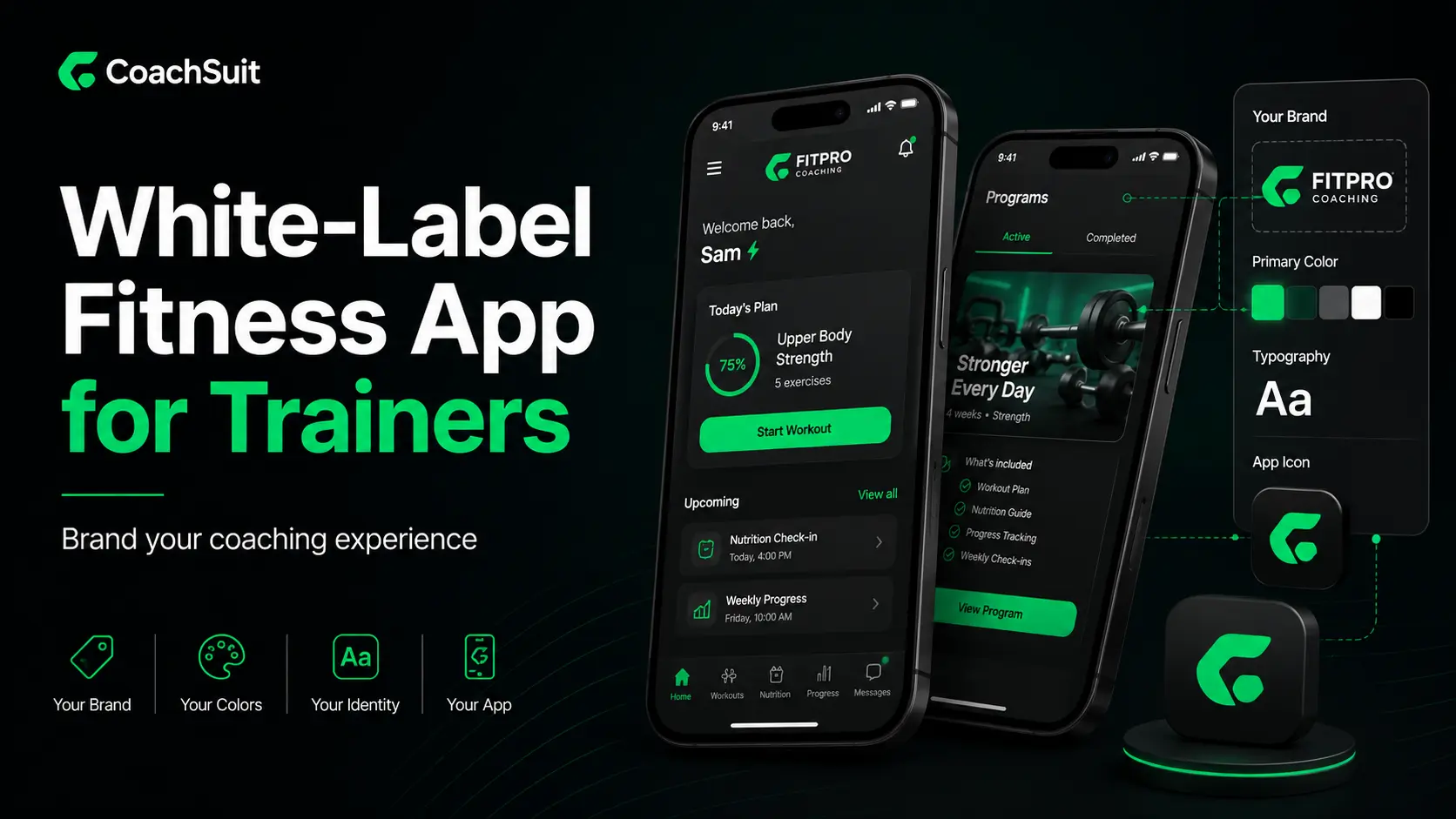
Many personal trainers and online coaches want their client experience to feel more professional and connected to their own brand. When workouts, guidance and supporting content live inside a mobile app that reflects your visual identity, coaching can feel more organized from the client side.
A white-label fitness app can help create that branded mobile experience without building software from scratch. It is a practical option for trainers who want clients to open an app under their brand rather than a generic platform where the trainer feels secondary.
But not every trainer needs a white-label app immediately. Some coaches are still testing their niche, others only need simple file delivery and some want full custom development with maximum control. The right choice depends on your business stage, content readiness and client delivery needs.
This article explains what a white-label fitness app means, what you can usually customize, what it does not automatically include and when a branded app experience makes sense for your coaching business.
What is a white-label fitness app?
A white-label fitness app is a mobile app experience that can be personalized around a trainer's brand. Instead of sending clients to a generic tool where your name appears as a small label, the app can reflect your logo, colors and visual direction so the coaching experience feels connected to your business.
White-label setups usually include brand elements such as logo placement, color themes, app visuals and selected content modules. This is different from asking clients to use a shared platform where every coach looks similar.
The exact meaning of white-label depends on the provider and commercial agreement. Always confirm what white-label means in your specific contract before assuming full flexibility.
If you are comparing delivery formats, it helps to understand how a branded app relates to a general fitness mobile app experience and what level of personalization each option includes.
Why trainers consider a branded app
Trainers often consider a branded app when they want a more professional client experience. Delivery through scattered PDFs, message threads, email links and generic apps can make even good programming feel less polished from the client side.
A branded app can bring workouts, programs and supporting guidance into one organized mobile experience. Brand consistency can support trust, though it does not guarantee retention or revenue.
Trainers who deliver programs repeatedly or work with remote clients often explore a personal trainer app as the next step beyond files and messages. For broader business planning, see How to Build a Digital Fitness Coaching Business.
What can usually be customized?
Customization levels vary by provider, but most white-label fitness apps support a core set of brand and content areas. Understanding what is typically included helps you compare options without assuming unlimited flexibility.
The exact level of personalization depends on the selected setup and confirmed scope. What looks flexible in marketing may still have practical limits once you start configuring modules and preparing content.
- Logo and brand colors applied across the app experience
- Visual identity aligned with your coaching brand direction
- App home experience structured around your content priorities
- Selected content modules based on your confirmed package
- Workout and program content organized for client access
- Exercise guidance with video instructions where included
- Recipes and meals as nutrition content if that module is selected
- Progress visibility for recorded activity where included
What a white-label app does not automatically mean
White-label branding sounds powerful, but the term alone does not tell you everything about ownership, features or business outcomes. Being clear about limitations helps you choose with realistic expectations.
These details should be clarified in the commercial agreement before purchase. Do not assume that a branded experience includes every coaching feature or full platform control.
- Full source code ownership
- Full platform ownership
- Unlimited feature changes without confirmed scope
- Unlimited custom development included in the base package
- Guaranteed business results, retention or revenue growth
- Payment processing or subscriptions included by default
- Every possible coaching feature in the standard setup
White-label app vs generic coaching app
Generic coaching apps can be useful. They are often fast to start and let you begin delivering content without a long setup period.
The trade-off is usually brand experience. Clients may feel they are inside someone else's platform rather than your coaching business.
A white-label or branded app connects more directly to your brand and can support a more consistent mobile coaching journey. Setup usually requires more planning and content preparation.
Neither option is always better. For a structured comparison, see Branded Fitness App vs Generic Coaching App, How to Choose a Personal Trainer App or compare personal trainer apps.
White-label app vs fully custom app development
Fully custom app development offers maximum control when budget, timeline and product scope allow. That path usually comes with higher cost, longer timelines and more responsibility across design, development, testing, publishing and maintenance.
A white-label or branded app offers a faster path to a branded experience with lower complexity than building from zero. It works well when you want a structured, productized solution within confirmed module scope.
If your current challenge is scattered file delivery, Online Coaching App vs PDFs and WhatsApp compares practical workflows before you commit to a branded app path.
What content should your branded app include?
A white-label app is only useful if it supports the content clients actually need. Start with what your offer promises and work backward to the modules your app should include.
Workouts and programs are usually the foundation. Strong workout program delivery means sessions are named, ordered and easy to follow on a phone.
Organized exercise video guidance inside the workout reduces repeated questions when clients train independently between check-ins.
If your offer includes nutrition support, recipes and meals can live inside the app as practical content. Useful client progress tracking supports better check-in conversations without promising specific outcomes.
When a white-label fitness app makes sense
A white-label fitness app tends to make sense when your coaching business has enough structure to benefit from a more organized mobile delivery experience.
- You have a clear coaching offer clients can understand quickly
- You want a stronger brand experience across client touchpoints
- You deliver workouts or programs repeatedly to multiple clients
- You work with remote or hybrid clients who need mobile access
- You want a more organized client journey than files and messages
- You are ready to prepare content, brand assets and onboarding materials
When it may not make sense yet
Honest guidance includes knowing when to wait. A white-label app is not the right first move for every trainer. Pushing for an app before your offer and content are ready often creates expense without solving the real bottleneck.
Many successful coaches start with simpler workflows and move to a branded app when their model, content and client volume justify the setup effort.
- You do not have a clear offer or defined client journey yet
- You are still testing your niche and offer format
- You only need a simple PDF or manual delivery workflow
- You have no organized content ready for app setup
- You want a fully custom platform with unlimited feature control
- You are not ready to manage a digital client experience consistently
Questions to ask before choosing a white-label fitness app
Before you sign an agreement, ask direct questions about branding, modules, setup and ongoing support. Providers should be able to explain scope clearly without vague promises.
Use this checklist in sales conversations and contract review. If answers are unclear, slow down until you understand what you are buying.
- What parts of the app can use my brand identity?
- Can I use my logo and colors across the client experience?
- What modules are included in my selected setup?
- Can I deliver workouts and programs inside the app?
- Can I include exercise video guidance for clients?
- Can I include recipes and meals if nutrition content is part of my offer?
- Can clients or trainers view recorded progress where included?
- Is the app available on both iOS and Android?
- What is included in setup and initial launch support?
- What is included after launch for maintenance and updates?
- What assets and content do I need to provide before launch?
- What does white-label mean specifically in the agreement?
White-label fitness app checklist
Use this checklist when comparing providers or preparing for launch. It covers the practical areas trainers often review before committing to a branded app experience.
- Logo and brand colors
- Visual identity
- iOS and Android support
- Workout and program delivery
- Exercise video guidance
- Recipes and meals if included
- Recorded progress visibility
- Client app experience
- Setup requirements
- Launch support
- Ongoing maintenance
- Clear commercial scope
- Ownership and usage terms
How CoachSuit fits
CoachSuit provides a branded mobile app experience for trainers, online coaches and gyms. Depending on selected modules, it can support workouts, programs, exercise guidance, recipes, meals and recorded progress inside one client-facing app personalized around your logo, colors and visual identity.
CoachSuit includes iOS and Android publishing support, initial design personalization and launch support. A typical launch takes 2-4 weeks depending on selected modules, content preparation and feedback speed. Ongoing maintenance and priority support are available through CoachSuit Club.
CoachSuit may not be necessary for someone who only needs a simple file delivery workflow. Explore CoachSuit for personal trainers, the online coaching platform direction, pricing and launch options or book a free demo.
Final takeaway
A white-label fitness app is about creating a more branded and organized client experience. It should support your coaching offer, not replace the clarity of what you sell or how you support clients over time.
The best choice depends on your business stage, content readiness, brand priorities and client delivery needs. Generic tools, branded apps and custom development each have trade-offs worth understanding before you commit.
Before choosing a provider, clarify customization scope, ownership and usage terms, included modules, setup requirements and post-launch support. Realistic expectations lead to better decisions than marketing language alone.
White-label fitness app FAQ
- What is a white-label fitness app?
- A white-label fitness app is a mobile app experience that can be personalized around your brand identity, such as your logo, colors and visual direction. The exact level of customization depends on the provider and confirmed scope.
- Do personal trainers need a white-label app?
- Not every trainer needs one. A white-label app makes more sense when you have a clear offer, recurring content, remote or hybrid clients and a desire for a more branded client experience.
- What can I customize in a white-label fitness app?
- Common customization areas include logo, colors, visual identity and selected app content. Depending on the setup, the app can also include workouts, programs, exercise guidance, recipes, meals and recorded progress visibility.
- Does white-label mean I own the source code?
- Not automatically. White-label usually refers to a branded app experience, not full source code ownership. Ownership and usage terms should be confirmed in the commercial agreement.
- Can CoachSuit be used as a white-label fitness app?
- CoachSuit provides a branded mobile app experience that can be personalized around your logo, colors and visual identity. Depending on selected modules, it can support workouts, programs, exercise guidance, recipes, meals and recorded progress.
- How long does a CoachSuit launch take?
- A typical CoachSuit launch takes 2-4 weeks, depending on selected modules, content preparation and feedback speed.
Ready to explore a branded fitness app for your coaching business?
Book a free CoachSuit demo to discuss your app direction, branding needs, selected modules and launch options.
Book a free demo