
CoachSuit blog
Published June 16, 2026
Gym App Features Members Actually Use
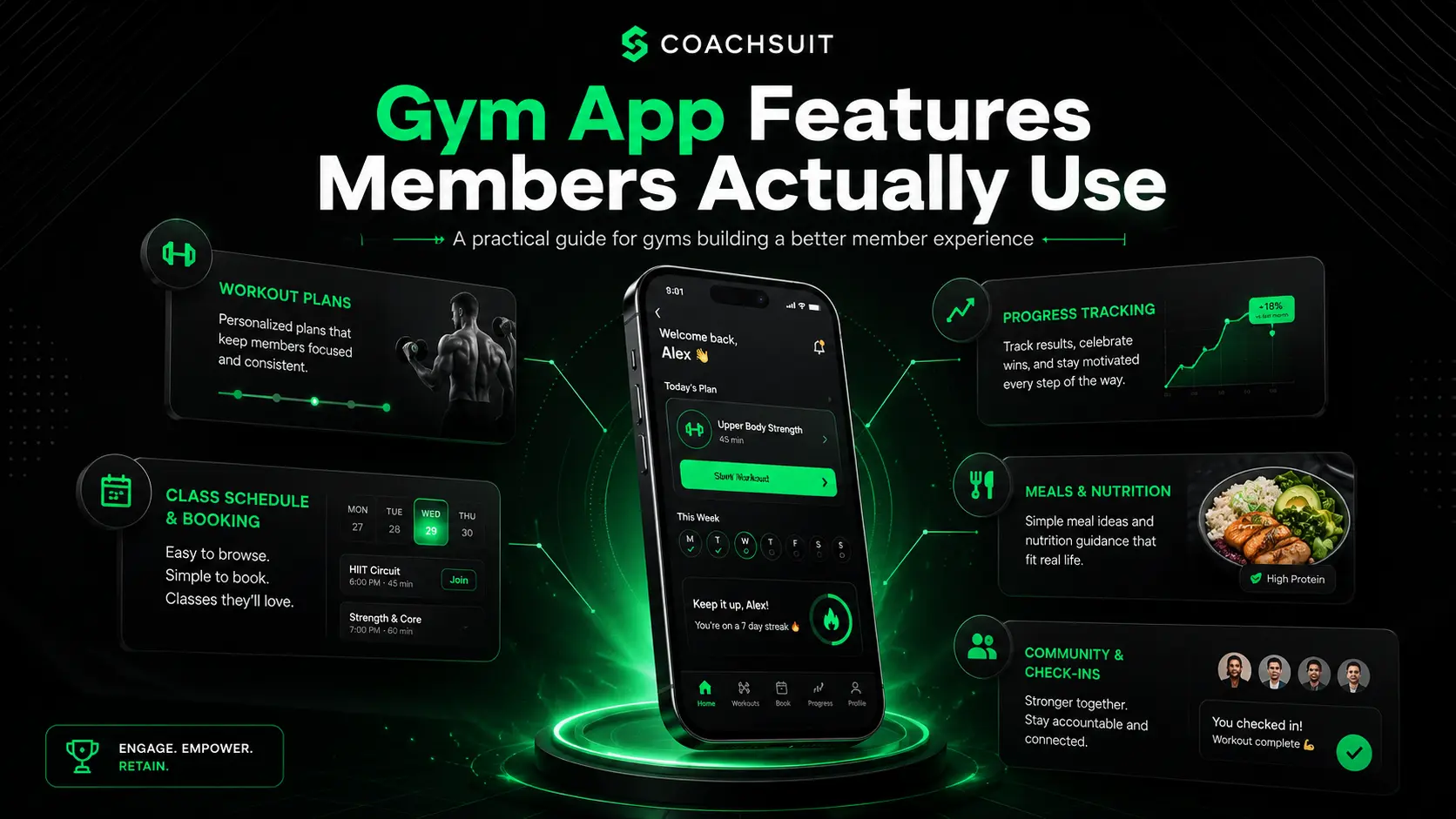
Many gyms think about launching a mobile app, but not every feature on a product page creates real value for members. Software demos can look impressive while everyday use stays confusing, especially when members only open the app briefly before or after training.
Members usually want clarity, convenience and support. They want to know what to train, how to follow a plan and where to find useful guidance without digging through menus or scattered files.
A useful gym member app should make training easier to follow, not add another confusing tool that sits unused on the home screen. The best gym app features members actually use are the ones connected to real training needs.
This guide explains the gym app features members are most likely to use, how to think about them honestly and how to avoid building an app nobody opens after the first week.
The best gym app is not the one with the most features
Feature-heavy gym software can look complete on a sales page and still feel overwhelming on a phone. Members open an app when they need something specific: today's workout, exercise instructions or a quick look at what they completed last week.
Members use features that solve real problems. If a feature does not make training clearer, easier to follow or better organized, it may sit unused no matter how advanced it sounds in marketing copy.
A useful gym mobile app should make it easier to train, follow a plan, access guidance and stay organized between visits. The goal is not to copy every fitness app feature, but to build a better member experience your team can maintain.
If you are evaluating options for a fitness app for gyms, start with member clarity rather than admin complexity. A smaller set of well-maintained features often beats a bloated app that members never understand.
Workout plans members can actually follow
Many gym members need structure, whether they are new to training or following a plan between coached sessions. A gym app can help by giving members access to clear workout plans they can open before or during training.
The structure should fit your coaching model, member level and available equipment. Useful plan types often include beginner plans, strength plans, conditioning plans, short programs, gym-based training blocks and repeatable programs.
Plans work best when session names, exercise order and basic training intent are visible without asking staff to resend content. Practical workout plans for gym members should connect to how members actually train in your facility.
Exercise video guidance
Members often forget movement details after a coaching session. Exercise video guidance helps them revisit instructions when they need them, especially when training alone later in the week.
Guidance should be close to the workout, not hidden in random links or old message threads. Video and written cues work well together for setup, alternatives and session reminders.
Keep expectations realistic. Exercise video guidance supports understanding and consistency between visits. It does not replace live coaching or hands-on form correction on the gym floor.
Progress tracking that feels simple
Progress tracking should help members see what they have done, not turn training into extra admin work. Useful visibility can include completed sessions, logged activity, training history or body metrics depending on your setup.
Progress tracking supports organization and motivation, but it does not guarantee results or retention on its own. A practical feature should connect back to training content inside the same app.
Simple progress tracking that members can understand quickly is often more valuable than advanced metrics nobody maintains or explains during onboarding.
Nutrition content without overcomplicating the app
Some gyms can add value with simple recipes or meal ideas, especially when lifestyle support is part of the member experience. Not every member needs detailed food logging or complex diet systems.
Nutrition content should be easy to browse and aligned with your gym's scope. If your team shares practical food guidance, the app should reflect that same level of simplicity rather than adding features your coaches do not use.
Simple content can be more usable than complicated nutrition systems. Members who want meal inspiration may browse recipes. Members who only want training support should not feel forced through nutrition screens they did not ask for.
CoachSuit supports recipes and meals as nutrition content inside the app. It is not presented as meal plan generation, macro tracking or calorie tracking. That distinction matters when your goal is practical food guidance rather than detailed diet logging.
Match nutrition modules to your real offer. Adding food content you never update can make the app feel unfinished. Leaving out nutrition your members expect can make the experience feel thin. Start with what you actually deliver.
Class schedules and booking, if they fit the gym model
For class-based gyms, schedules and booking can be genuinely useful. Members want to know what is available, when sessions run and whether a spot is open before they plan their week.
This feature only matters if classes are a core part of the gym model. A strength gym focused on floor coaching may not need booking as a priority. A studio built around timed classes often will.
Scheduling and booking are common gym app features worth considering, but they are not the only path to a useful member experience. Many gyms benefit more from training content, guidance and progress visibility first.
Member onboarding inside the app
New members need clear first steps. A gym app can help them understand what to do first: where to find starter programs, how to navigate workouts and where to ask for support.
Onboarding can include welcome content, starter programs, gym rules and equipment guidance. A simple flow makes the app feel useful from day one, especially when staff mention it during the first visit.
Brand consistency and member trust
A generic tool may work functionally, but it can feel disconnected from the gym members joined. Members notice when the mobile experience looks like a third-party product instead of part of the same business they see on the floor.
A branded gym app can make training content feel like an extension of the gym's identity. Branding can include logo, colors, visual identity and tone that match how the business presents itself in person.
Brand consistency does not guarantee retention or revenue. It can, however, make the member experience feel more coherent when workouts, guidance and supporting content live inside an environment that reflects the gym.
Gyms that care about presentation often evaluate a branded gym app rather than sending members to a generic platform where the gym brand feels secondary.
For a broader comparison of branded and generic paths, see Branded Fitness App vs Generic Coaching App. The same principles apply when members expect a consistent mobile experience from a gym they already trust in person.
Push notifications and reminders: useful, but easy to overuse
Notifications can be useful when they are relevant, such as a booked class reminder or an update members asked for. Too many alerts can annoy members and lead to notifications being turned off entirely.
Gyms should use reminders carefully and only when they support real member needs. Relevance matters more than frequency, and some gyms may need stronger in-app organization instead of notification-heavy features.
Community features: useful for some gyms, unnecessary for others
Some gyms benefit from community features such as groups or challenges, especially when the gym already has a strong culture members want to extend digitally. Adding community features will not automatically create engagement.
For many gyms, programs, guidance and progress visibility matter more than social layers. Evaluate community features against actual member behavior rather than competitor feature lists.
What features do members ignore?
Members are less likely to use features that are hard to find, too complicated, not connected to their training, not explained during onboarding, not updated by the gym or too time-consuming for the value they provide. They also ignore features created only because competitors have them.
A smaller feature set that members use weekly is better than a large feature set nobody understands. For evaluation context, see Personal Trainer App Features and How to Choose a Personal Trainer App.
Gym app feature checklist
Use this checklist when you review gym software, compare app providers or decide which modules to include at launch. It keeps the conversation focused on member use, not marketing language.
- Does the feature solve a real member problem?
- Will members use it weekly?
- Does it make training easier to follow?
- Does it support your coaching model?
- Is it easy to explain during onboarding?
- Can your team maintain it?
- Does it work well on mobile?
- Does it fit your brand?
- Does it connect to workouts, guidance or progress?
- Is it useful enough to keep long-term?
Gym app features and why members use them
This table summarizes practical gym app features and the member problems they often solve. Use it as a starting point when you prioritize modules for your gym model.
Where CoachSuit fits
CoachSuit is built for trainers, online coaches and gyms that want a branded mobile app experience. For gyms, it can help deliver workouts, programs, exercise guidance, recipes, meals and recorded member progress inside a white-label fitness app for gyms personalized around the gym's logo, colors and visual identity.
It can be useful for gyms that want to extend the member experience beyond the physical gym floor. CoachSuit includes iOS and Android publishing support, initial design personalization and launch support, with ongoing maintenance and priority support available through CoachSuit Club. A typical launch takes 2-4 weeks depending on selected modules, content preparation and feedback speed.
It may not be necessary for a gym that only needs a simple booking tool, access control system or class schedule without training content delivery. If your priority is a branded fitness mobile app for member programs and guidance, CoachSuit for gyms may be worth exploring.
Review pricing and launch options or book a free demo to discuss modules and branding direction. For related reading, see White-Label Fitness App for Trainers, Branded Fitness App vs Generic Coaching App and Personal Trainer App Features.
Final takeaway
Gym members do not need every possible feature. They need useful features that support training, clarity and consistency inside a mobile experience they can open quickly and understand.
Workout plans, exercise guidance, nutrition content, progress tracking and brand consistency are often more practical than bloated feature lists copied from unrelated fitness products.
Class schedules, booking, notifications and community tools can matter for some gyms, but only when they fit the business model and your team can maintain them well.
The right gym app depends on your gym's model, member needs and ability to maintain the content behind each module. Build for weekly use, explain features during onboarding and keep the experience focused on training support.
Gym app features FAQ
- What features should a gym app include?
- A useful gym app should include features that support the member experience, such as workout plans, exercise guidance, simple nutrition content, progress visibility and a clear mobile interface. Some gyms may also need schedules, booking or community features depending on their model.
- Do gym members actually use mobile apps?
- Members are more likely to use a gym app when it helps them solve practical problems, such as knowing what to train, finding exercise guidance, accessing useful content or tracking progress. Apps with too many disconnected features can be harder to keep using.
- Is a branded gym app better than a generic app?
- A branded gym app can make the mobile experience feel more connected to the gym's identity. A generic app can still work for basic functionality. The better choice depends on the gym's stage, content, budget and member experience goals.
- Can CoachSuit be used by gyms?
- Yes. CoachSuit is built for trainers, online coaches and gyms that want a branded mobile app experience. Depending on selected modules, it can support workouts, programs, exercise guidance, recipes, meals and recorded member progress.
- Does CoachSuit include booking or class schedules?
- Booking and class scheduling are not presented as verified standard CoachSuit capabilities on this site. CoachSuit focuses on a branded app experience for selected fitness content, including workouts, programs, exercise guidance, recipes, meals and recorded progress depending on selected modules.
- How long does a CoachSuit gym app launch take?
- A typical CoachSuit launch takes 2-4 weeks, depending on selected modules, content preparation and feedback speed.
Want to build a branded gym app members can actually use?
Book a free CoachSuit demo to discuss your gym model, app modules, branding direction and launch options.
Book a free demo