
CoachSuit blog
Published June 19, 2026
How Gyms Can Improve Member Experience with a Mobile App
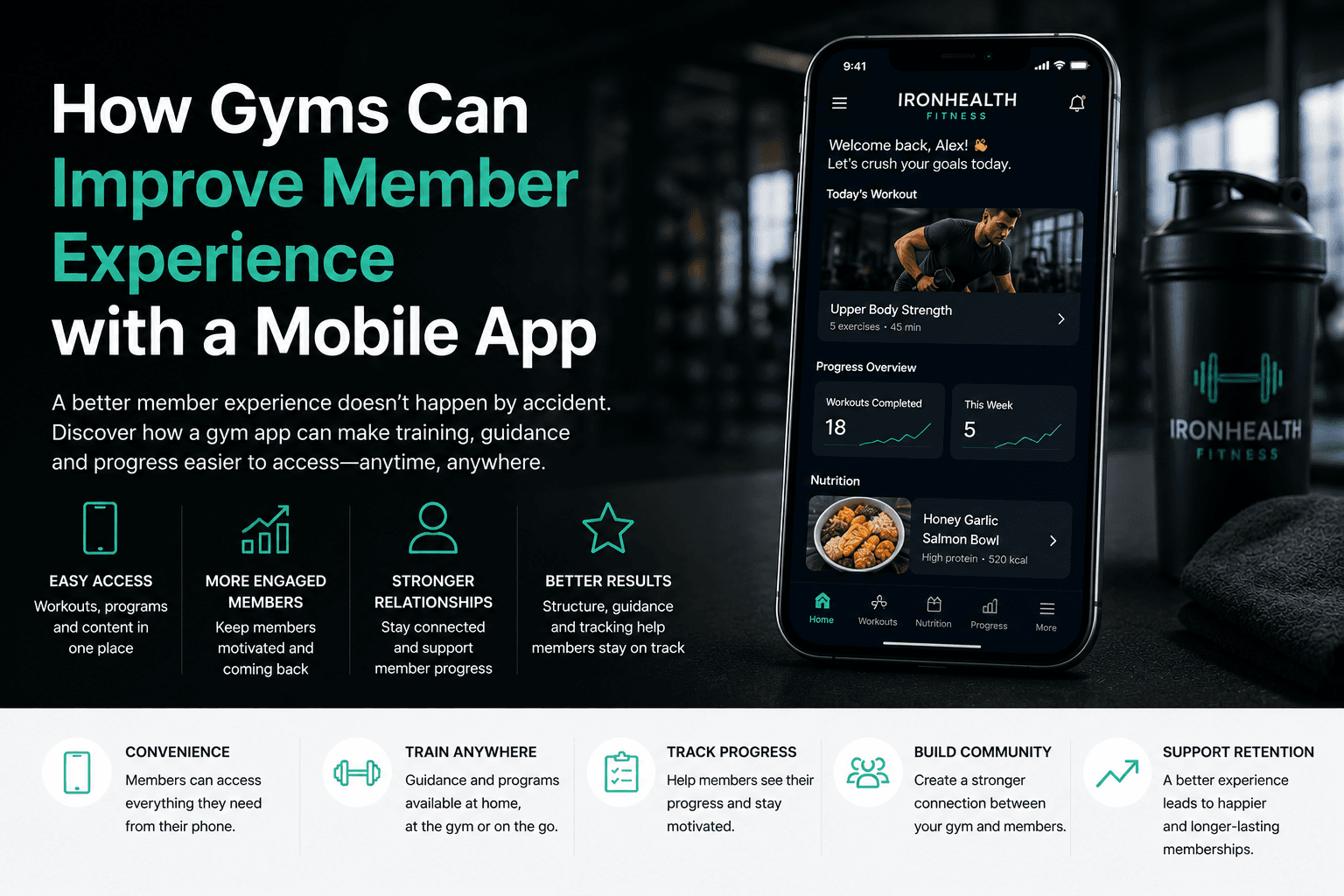
Member experience does not stop when someone leaves the gym. Between sessions, members still need structure, access to guidance and a way to stay connected to their training goals.
Members often need clarity on what to do next, especially in the early weeks of membership. Without that clarity, engagement can drop and the value of membership can feel less obvious over time.
A mobile app can help when it is built around the real member journey rather than a list of software features. The difference is an app members open because it is useful versus one that sits on their phone and never gets used.
This guide explains how gyms can use a mobile app to improve the member experience in a practical way, covering training delivery, exercise guidance, nutrition content, progress visibility, onboarding and brand consistency.
What does member experience mean for gyms?
Member experience is more than the equipment you provide or the cleanliness of your facility. It includes how members feel before, during and after training. It includes the clarity they have on what to do, the guidance they can access and the confidence they build as they progress.
A gym that invests in floor coaching but leaves members without structure outside those sessions is still delivering an incomplete experience. Member experience covers onboarding, training delivery, progress visibility, brand consistency and the ease of accessing support when needed.
A mobile app should support these parts of the experience, not distract from them. The goal is not to add technology for its own sake. The goal is to make the gym more useful to members beyond the moments when staff are directly available.
If you are evaluating a fitness app for gyms, start by mapping the real gaps in your member journey before comparing software features.
Why mobile access matters for gym members
Members already use smartphones to manage their schedules, access content and follow routines. A gym app can place training content in the same space members already use every day.
Without a central place for gym content, members often rely on scattered PDFs, messages, printed sheets or random links. Each of those formats creates friction. Content gets lost, guidance becomes inconsistent and members are left to figure things out on their own.
The best mobile experience for gym members is easy to open, easy to understand and genuinely useful during a real training session. It does not need to be complex. It needs to be organized, accessible and connected to the programs or guidance the gym already delivers.
A well-structured fitness mobile app can reduce content scatter and give members one consistent place to go when they need training support.
Give members a clear training path
One of the most common problems for new gym members is not knowing what to do. They may have had an induction session, but without a clear program to follow, many members repeat the same exercises or feel uncertain on the floor.
Workout programs can solve this. A program gives members a clear sequence of sessions, a structure to follow and a sense of progression. Programs can be designed for beginners, specific training goals, gym floor use or hybrid gym and home training.
The app should make it easy for a member to find today's session, understand what to do and move through the workout without extra questions. When content is organized clearly, members can train with more confidence and less hesitation.
Workout programs for gym members work best when they are specific enough to be useful and simple enough to follow without additional explanation.
Use exercise guidance to reduce confusion
Even when members receive coaching on the gym floor, they often forget instructions by the time their next solo session arrives. A movement learned with a trainer may feel unfamiliar two days later when training alone.
Exercise video guidance attached to workouts can help members revisit instructions when they need them. When a member opens an exercise in their program and finds a short video or written cue alongside it, they have a reference point without needing to track down a staff member.
Guidance should sit close to the workout flow. If members have to leave the app, search elsewhere or message a trainer to remember how an exercise works, the friction is too high. The closer the guidance is to the actual session, the more likely members are to use it.
This is especially useful for members training without a coach beside them. It does not replace in-person coaching, professional programming advice or live instruction. It supports consistency between sessions.
Exercise video guidance inside the workout flow reduces repeated questions and helps members stay on track between visits.
Add simple nutrition content where it fits
Not every gym needs a complex nutrition system. But many gyms can add value by including simple recipes or meal ideas that support the broader lifestyle conversation their coaches already have with members.
Practical recipe content is easier for most members to engage with than complicated tracking interfaces. When a member can browse a few meal ideas that match their training goals, they get useful information without being overwhelmed by data entry.
Nutrition content should match the gym's qualifications, scope and promise. If your coaches discuss general food habits but do not prescribe detailed diet plans, the app should reflect that same level of simplicity rather than adding features your staff do not explain or support.
CoachSuit supports recipes and meals as nutrition content inside the app. This is not presented as meal plan generation, macro tracking or calorie counting. Match nutrition modules to what your gym actually delivers.
Make progress easier to see
Many members want to know whether they are being consistent. Without any form of progress visibility, members may feel like they are going through the motions without a clear sense of whether they are moving forward.
Progress tracking can include completed workouts, training history, logged activity or body metrics depending on the setup. The goal is to give members a clear view of their consistency and effort without creating extra administrative work.
Progress tracking supports clarity and motivation, but it does not guarantee results. Members still need to show up, follow programs and make choices outside the gym. The tracking feature supports organization, not outcomes.
Keep progress simple enough that members actually use it. A clean history of completed sessions often provides more practical value than complex dashboards requiring extensive input.
Member progress tracking that connects back to training content inside the same app gives members and gym teams a shared reference point without extra friction.
Improve onboarding for new members
The first week of membership shapes how a member experiences the gym long-term. If a new member arrives with no clear path, opens the app once and finds nothing helpful, that early impression can affect how they engage for months.
A mobile app can support onboarding by giving new members a starting point. That might include a beginner program, welcome content, guidance on how to use the app, a summary of gym rules or expectations and clarity on what to focus on in the first few weeks.
A simple onboarding path does not need to be elaborate. It needs to reduce confusion, answer the most common early questions and help members feel confident enough to return and build a consistent habit.
When members know what to do from day one, they are more likely to engage with the app and the gym in the weeks that follow.
Keep the experience connected to your gym brand
A generic fitness app may offer useful functionality, but it can feel disconnected from the specific gym a member joined. When members open an app that shows no connection to the business they trust in person, the digital experience can feel like an afterthought.
A branded gym app can make the digital member experience feel like a natural extension of the same business. Branding can include logo placement, color themes, visual identity and the tone of content throughout the app.
Branding supports consistency, but it does not guarantee retention, revenue or member engagement on its own. A branded app with no useful content will not perform better than a simpler tool members actually open. Branding improves the experience when the underlying content is already useful.
For more context on how branded and generic app experiences compare, see White-Label Fitness App for Gyms.
Avoid building an app nobody uses
Some gyms invest in a mobile app and find that members rarely open it after the first week. This usually happens when the app does not solve a real problem or when common launch mistakes are not addressed early.
A smaller app that solves real member problems is better than a large app members rarely open. Start with the features your members need most and build from there.
- Adding too many features before the core experience is useful
- Copying competitor features without understanding what your members actually need
- Launching without content already inside the app
- Hiding useful features too deep in the navigation
- Not explaining the app during the onboarding process
- Not updating programs or content after launch
- Using the app as a brochure instead of a member support tool
- Choosing tools that do not match the gym model
Match the app to your gym model
Different gym models need different app experiences. A strength gym may prioritize structured programs, progressive training structure and exercise guidance. A boutique studio may care more about branded experience and session-based content. A personal training gym may need individual program delivery and client progress visibility.
A class-based gym may care more about schedules and booking tools. A coaching-focused gym may care more about programs, guidance and progress tracking. A transformation or challenge-based gym may need structured plans, progress milestones and time-limited content.
The app should reflect the real needs of the gym model, not a generic feature checklist. Choosing tools that do not match how your gym actually operates is one of the fastest ways to end up with an app members rarely use.
For related context, see Gym App Features Members Actually Use for more detail on what members typically engage with across different gym types.
Gym mobile app checklist for better member experience
Use this checklist when reviewing app options, planning your launch or evaluating your current setup.
- Does the app help members know what to do next?
- Can members find workouts quickly?
- Is exercise guidance easy to access?
- Is nutrition content simple and relevant?
- Can members see progress without confusion?
- Does the app support onboarding?
- Does it feel connected to the gym brand?
- Is the app easy for non-technical members?
- Can the gym team maintain the content?
- Does it match the actual gym model?
- Does it work on iOS and Android?
- Is launch and support included?
How a mobile app can improve the gym member experience
The following table outlines key areas of the gym member experience, how a mobile app can help and what to avoid when building or choosing an app.
Where CoachSuit fits
CoachSuit is built for trainers, online coaches and gyms that want a branded mobile app experience. For gyms, CoachSuit can help deliver selected fitness content in a mobile format personalized around the gym's logo, colors and visual identity.
Depending on selected modules, CoachSuit can support workouts, programs, exercise guidance, recipes, meals and recorded member progress. It includes iOS and Android publishing support, initial design personalization and launch support, with ongoing maintenance and priority support available through CoachSuit Club. A typical launch takes 2-4 weeks depending on selected modules, content preparation and feedback speed.
CoachSuit can be useful for gyms that want to extend the member experience beyond the physical gym floor. It may not be necessary for a gym that only needs a booking tool, access control system or a basic class schedule without training content delivery.
To explore whether CoachSuit fits your gym model, see CoachSuit for gyms, the fitness mobile app overview, white-label fitness app options, pricing and launch options or book a free demo.
For related reading, see Branded Fitness App vs Generic Coaching App and White-Label Fitness App for Trainers.
Final takeaway
A mobile app can improve member experience when it supports real member needs rather than adding technology for its own sake.
The app should make training, guidance, content and progress easier to access. It should reduce the friction between what members need and what the gym delivers.
Branding matters, but usefulness matters more. A well-branded app with thin or outdated content will not perform better than a simpler tool members actually open.
The best gym app experience depends on the gym's model, content and member journey. Start by understanding what members actually need and build the app experience around that.
Gym member experience app FAQ
- How can a mobile app improve gym member experience?
- A mobile app can improve gym member experience by making workouts, exercise guidance, nutrition content and progress visibility easier to access. It works best when it supports the gym's real member journey.
- What should a gym app include for members?
- Useful gym app features can include workout programs, exercise video guidance, simple nutrition content, progress visibility, onboarding content and a branded mobile experience. Some gyms may also need booking or scheduling depending on their model.
- Do all gyms need a mobile app?
- No. A gym app makes more sense when the gym has content, programs or member support that can be delivered through mobile. A gym that only needs booking or access control may need a different tool.
- Can CoachSuit help gyms improve member experience?
- Yes. CoachSuit helps gyms create a branded mobile app experience. Depending on selected modules, it can support workouts, programs, exercise guidance, recipes, meals and recorded member progress.
- Does CoachSuit include class booking or access control?
- Class booking and access control are not presented as verified standard CoachSuit capabilities on this site. CoachSuit focuses on branded mobile delivery for selected fitness content, including workouts, programs, exercise guidance, recipes, meals and recorded progress depending on selected modules.
- How long does a CoachSuit launch take?
- A typical CoachSuit launch takes 2-4 weeks, depending on selected modules, content preparation and feedback speed.
Want to improve your gym's member experience with a branded app?
Book a free CoachSuit demo to discuss your gym model, app modules, branding direction and launch options.
Book a free demo