
CoachSuit blog
Published June 18, 2026
White-Label Fitness App for Gyms: What Gym Owners Should Know
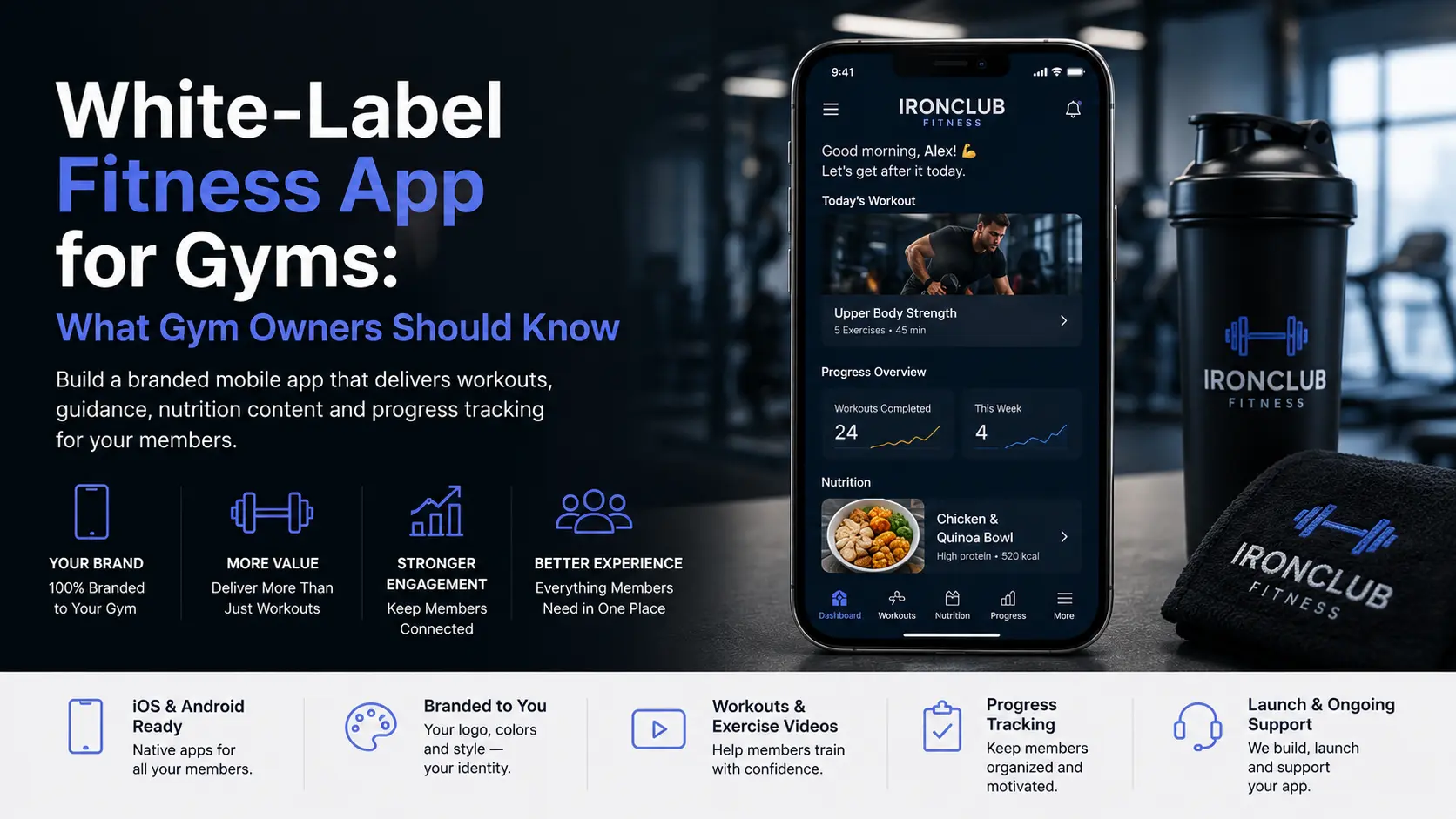
More gyms are looking for mobile app experiences that extend what members get beyond the training floor. Members expect clarity on what to train, how to follow guidance and where to find useful content between visits.
A white-label fitness app can be faster than building a custom app from zero, especially when a gym wants a branded mobile experience without taking on full software development. The trade-off is understanding what white-label actually includes and what it does not.
The real question is not only whether the app has your logo. Members still need useful content, clear navigation and a reason to open the app more than once. Branding matters, but member value matters more for long-term use.
This guide explains what gym owners should know before choosing a white-label fitness app, including how it compares to other options, which features matter most and what to ask before you commit.
What is a white-label fitness app for gyms?
A white-label fitness app for gyms is usually a mobile app experience that can be branded around a gym or fitness business. Instead of sending members to a generic platform where your gym feels like a small label, the app can reflect your logo, colors and visual identity.
Branding may include logo placement, color themes, app visuals and how content is organized for members. The exact scope depends on the provider and commercial agreement, so gym owners should confirm what is included before assuming full flexibility.
White-label does not automatically mean full source code ownership or unlimited customization. The term usually refers to a branded app experience built on an existing platform, not a bespoke product developed entirely from scratch.
If you are exploring this path, it helps to understand how a white-label fitness app differs from a general fitness tool and what level of personalization your gym can realistically expect at launch.
White-label app vs generic app vs custom app
Gym owners often compare three broad paths when they think about member mobile experiences. Each has trade-offs, and none is automatically the right choice for every gym model.
A generic app is usually faster to start and may work when basic functionality matters more than brand presentation. Members often experience a shared platform where the gym brand feels secondary, and customization is usually limited.
A white-label or branded gym app sits in the middle. It is personalized around the gym's identity and is typically faster to launch than building from zero. Members may feel the app belongs to the gym they joined, especially when workouts, guidance and supporting content live inside the same branded environment.
A fully custom app offers the highest potential control, but it usually requires more budget, time, testing and ongoing maintenance responsibility. Gyms that choose this path often need internal or external product support to keep the app updated and stable over time.
The best option depends on your gym's stage, content readiness, member expectations and how much operational complexity your team can manage. For a broader comparison of branded and generic experiences, see Branded Fitness App vs Generic Coaching App.
Why gyms consider white-label fitness apps
Gyms want to extend the member experience beyond the physical location. Members train at home, travel, follow programs between coached sessions or need guidance when staff are not immediately available on the floor.
A branded app can make digital content feel connected to the gym rather than scattered across PDFs, message threads or third-party tools. When members open an app that reflects the gym's identity, training content can feel like part of the same business they trust in person.
A white-label fitness app can help gyms avoid starting software development from zero when the priority is delivering selected fitness content in a mobile format. None of this guarantees retention, revenue or engagement on its own.
Gyms evaluating this path often start with CoachSuit for gyms when they want workouts, guidance and progress visibility in one gym mobile app members can open on their phones.
Branding matters, but it is not the whole app
Logo and colors matter because they make the app feel connected to the gym. Members notice when the mobile experience matches the business they joined, especially if your gym invests in presentation, coaching quality and a consistent member journey.
But branding alone is not enough. Members still need useful content, clear navigation and a reason to open the app when they are unsure what to train or need exercise instructions before a session.
A good gym member app combines brand consistency with practical member value. That means workouts members can follow, guidance they can revisit, progress they can see and content your team actually maintains. The goal is a gym member experience that feels useful on a phone, not just branded on a sales page.
A beautiful app with no useful content will not solve much. If the app looks polished but programs are outdated, navigation is confusing or members cannot find guidance quickly, branding will not compensate for weak delivery.
Gyms that care about presentation often evaluate a branded gym app as part of a broader member experience strategy.
Workout programs for members
Many gym members need structure, whether they are beginners, returning after time away or training between coached sessions. A white-label app can help deliver workout plans or programs under the gym's brand so members know what to do when they walk in or train elsewhere.
Programs should match member level, available equipment and your gym model. A strength-focused facility, a hybrid coaching gym and a general fitness club may need very different program types and session structures.
Useful program formats often include beginner onboarding plans, strength training blocks, conditioning sessions, short challenges and repeatable templates your team can update over time. The goal is clarity, not complexity.
Practical workout plans for gym members work best when session names, exercise order and basic training intent are visible without asking staff to resend content. For related feature context, see Gym App Features Members Actually Use.
Exercise video guidance
Members often need to revisit exercise instructions after a coaching session or when training alone later in the week. Video guidance can make workouts easier to follow, especially for members who are still learning movement patterns or working with new equipment.
Exercise guidance should be close to the workout flow, not hidden in random links or old message threads. When a member opens today's session, instructions should be one tap away rather than something they have to search for separately.
This can be useful for members training without a coach beside them, but it does not replace live coaching on the gym floor. Video and written cues support understanding and consistency. They do not promise injury prevention, perfect form or live form correction.
Organized exercise video guidance inside the workout reduces repeated questions and helps members stay on track between visits.
Nutrition content for gyms
Some gyms want to support members with simple nutrition content as part of a broader lifestyle offer. That might mean practical recipes, meal ideas or food guidance that fits how your team actually coaches.
Recipes and meals can be easier for members to browse than complicated tracking systems, especially when your gym does not specialize in detailed diet coaching. Not every gym app needs a complex nutrition system to add value.
Nutrition content should fit the gym's qualifications, scope and promise. If your team shares practical food guidance in person, the app should reflect that same level of simplicity rather than adding features your staff do not use or explain.
CoachSuit supports recipes and meals as nutrition content inside the app. It is not presented as meal plan generation, macro tracking or calorie tracking. Match nutrition modules to what your gym actually delivers rather than what looks impressive on a feature list.
Member progress tracking
Progress visibility helps members and gyms keep the fitness journey organized. Depending on the setup, it can include completed workouts, training history, logged activity or body metrics members choose to record over time.
Progress tracking supports organization and motivation, but it does not guarantee results. The best progress feature is simple enough for members to keep using without turning every session into extra admin work.
Useful member progress tracking connects back to training content inside the same app. When members can see what they completed and staff can reference training history during conversations, the feature supports clarity rather than hype.
Avoid overcomplicating progress modules at launch. A straightforward history of completed sessions often beats advanced metrics that nobody maintains or explains during onboarding.
What a white-label fitness app will not automatically solve
A white-label app is a tool, not a complete business strategy.
It will not automatically solve weak onboarding, unclear gym offers, low content quality, lack of staff adoption, poor member communication, unrealistic member expectations, inconsistent updates or the absence of a clear coaching process.
Gyms sometimes expect an app to create engagement on its own. In practice, members use apps that support problems they already have. If the gym offer is unclear or content is thin, branding and software alone will not change member behavior.
The app works best when it supports an already clear gym experience. Your team should know what members receive, how content is updated and how staff introduce the app during onboarding before launch day.
Questions gym owners should ask before choosing a provider
Before you sign an agreement, ask direct questions about branding, modules, setup and ongoing support.
Use this white-label fitness app checklist for gyms when you compare providers, review contracts or prepare for launch conversations with your team.
- Can the app use our logo, colors and visual identity?
- Does it support iOS and Android?
- What fitness content can we deliver?
- Can we offer workout plans and programs?
- Does it support exercise video guidance?
- Can we include recipes or meals if needed?
- Can members track or record progress?
- What launch support is included?
- What ongoing maintenance is included?
- Who prepares the content?
- How long does launch usually take?
- What happens after launch?
- What does the agreement say about branding, access and ownership?
What to evaluate in a white-label fitness app for gyms
This table summarizes practical areas to review when you compare white-label fitness app options. Use it alongside the checklist above to keep evaluation focused on member value and operational fit.
When a white-label app makes sense for a gym
A white-label fitness app can make sense when the gym has a clear member offer and wants a branded mobile experience that extends beyond the physical location. It may fit when the gym wants to deliver programs beyond the gym floor, members need guidance outside coaching sessions, or the business wants selected content in one mobile place.
It also makes sense when the gym is ready to prepare content and brand assets and wants launch support instead of managing a fully custom build. Teams that can maintain workouts, update guidance and explain the app during onboarding tend to get more value from the investment.
When a simple tool may be enough
A white-label app may not be necessary for every gym. Honest evaluation includes knowing when a simpler tool or a different priority makes more sense.
If the gym only needs class booking, access control or a very simple schedule, another tool may fit better. If the gym has no content or onboarding process yet, it may need to organize that first before investing in a gym app for members.
The best app depends on the gym's actual model and member needs. Some gyms benefit from training-focused mobile delivery. Others need operational tools first. Neither path is wrong, but they solve different problems.
Where CoachSuit fits
CoachSuit is built for trainers, online coaches and gyms that want a branded mobile app experience. For gyms, CoachSuit can help deliver selected fitness content in a mobile format personalized around the gym's logo, colors and visual identity.
Depending on selected modules, CoachSuit can support workouts, programs, exercise guidance, recipes, meals and recorded member progress. It includes iOS and Android publishing support, initial design personalization and launch support, with ongoing maintenance and priority support available through CoachSuit Club. A typical launch takes 2-4 weeks depending on selected modules, content preparation and feedback speed.
It may not be necessary for a gym that only needs a booking tool, access control system or basic class schedule without training content delivery. If your priority is a branded fitness mobile app for member programs and guidance, explore CoachSuit for gyms, white-label fitness app options, pricing and launch options or book a free demo.
For related reading, see Gym App Features Members Actually Use, Branded Fitness App vs Generic Coaching App, White-Label Fitness App for Trainers and Personal Trainer App Features.
Final takeaway
A white-label fitness app can help gyms create a branded mobile member experience without building from zero. The right app should support the gym's real content, coaching model and member needs rather than copying a generic feature list.
Branding matters, but content, usability, progress visibility and support matter too. Gym owners should choose based on fit, not only features.
When the gym model, content and member experience are aligned, a branded app can become a practical extension of what you already deliver on the floor.
White-label fitness app for gyms FAQ
- What is a white-label fitness app for gyms?
- A white-label fitness app for gyms is a mobile app experience that can be personalized around a gym's brand, including logo, colors and visual identity. The exact features and ownership terms depend on the provider and agreement.
- Is a white-label fitness app the same as a custom app?
- No. A white-label app is usually faster to launch because it is built from an existing platform or system and branded for the gym. A fully custom app is built from zero and usually requires more time, budget, testing and maintenance.
- What features should a gym look for in a white-label app?
- Useful features can include branded design, workout programs, exercise video guidance, simple nutrition content, recorded progress visibility, iOS and Android support, launch support and ongoing maintenance options.
- Can CoachSuit be used as a white-label fitness app for gyms?
- Yes. CoachSuit provides a branded mobile app experience for trainers, online coaches and gyms. Depending on selected modules, it can support workouts, programs, exercise guidance, recipes, meals and recorded member progress.
- Does CoachSuit include class booking or access control?
- Class booking and access control are not presented as verified standard CoachSuit capabilities on this site. CoachSuit focuses on a branded app experience for selected fitness content, including workouts, programs, exercise guidance, recipes, meals and recorded progress depending on selected modules.
- How long does a CoachSuit gym app launch take?
- A typical CoachSuit launch takes 2-4 weeks, depending on selected modules, content preparation and feedback speed.
Want to explore a branded app for your gym?
Book a free CoachSuit demo to discuss your gym model, app modules, branding direction and launch options.
Book a free demo