
CoachSuit blog
Published June 9, 2026
How to Build a Digital Fitness Coaching Business
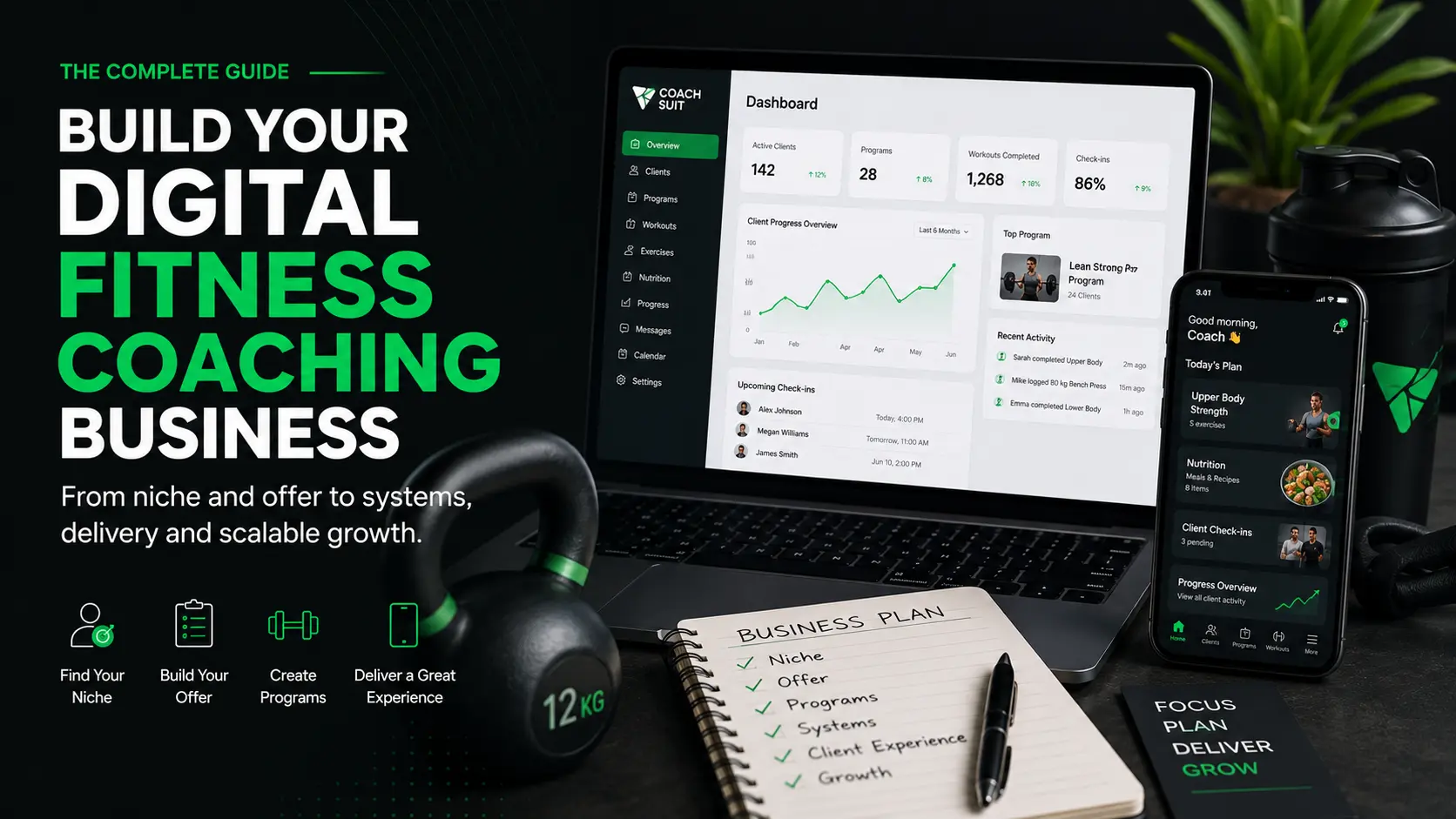
Fitness coaching is no longer limited to in-person sessions. Trainers can reach clients online, deliver programs remotely and build coaching relationships that do not depend on gym floor time alone.
That opportunity is real, but digital coaching needs structure. Without a clear offer, organized content and a consistent client experience, online coaching can quickly turn into scattered files, repeated messages and confusion about what clients should do each week.
A digital fitness coaching business is not only social media posts and random workout files. It is a coaching model with a defined audience, a clear delivery system and a client journey that makes training easier to follow between sessions.
This guide explains how to build a clearer online coaching business, from niche and offer planning to program delivery, client experience, progress review and the tools that support your model.
What is a digital fitness coaching business?
A digital fitness coaching business delivers fitness guidance, programs, content or support through online systems. Instead of relying only on face-to-face sessions, the coach uses digital tools to help clients train, stay organized and access coaching resources between check-ins.
That can include fully online coaching, hybrid coaching, ready-made programs or delivery through a branded mobile app. The format varies, but the business still needs a clear coaching offer at the center.
Posting workouts on social media or sending occasional PDFs is not the same as building an online fitness coaching business. Clients need to understand what they bought, where to find it and how support works over time.
Many trainers use an online coaching platform or a dedicated fitness mobile app to organize delivery. The tool matters less than the structure behind it.
Choose a specific coaching niche
A niche helps you speak to the right audience with language, examples and program design that feel relevant. When your offer is too broad, potential clients may struggle to see why it fits them specifically.
Your niche can be based on training goals, coaching style, audience type, available equipment, lifestyle constraints or experience level. The goal is not to exclude everyone else forever. It is to make your current offer easier to understand and easier to sell.
Examples include beginners who want structure, busy professionals with limited training time, strength-focused clients, gym members who need guidance between sessions, remote clients training alone and people returning to fitness after a break.
A niche does not guarantee sales. It simply makes your marketing, program design and client onboarding more focused. When you know who you are building for, you can make better decisions about support level, pricing and delivery format.
Define the offer before choosing tools
Many coaches choose tools before they know what they are selling. That often leads to systems that look impressive but do not match the actual coaching model.
Your offer should define what the client receives and how support works. Tools should support the offer, not replace it.
Before you compare software, answer these questions clearly. Who is the offer for? What does the client receive? Is it one-to-one, group, ready-made or hybrid? How long does it last? What content and support are included? How is progress reviewed?
If you are packaging programs as products, How to Sell Workout Programs Online covers offer clarity from a program sales perspective.
For a step-by-step guide to offer design, see How to Create an Online Fitness Coaching Offer.
Build your workout and program system
Digital coaching needs structured program delivery. Clients should understand what to do each week and each session without needing you to re-explain the plan repeatedly.
A useful program system includes program length, weekly structure, clear workout names, logical exercise order, defined sets and reps, progression logic and short notes where the training intent needs context.
Strong workout program delivery means clients can open one organized experience and follow the plan from their phone.
- Program length and training frequency
- Weekly layout with named sessions
- Exercise order, sets and reps
- Progression logic across weeks
- Notes or guidance for key sessions
- Alternatives where equipment or schedule varies
Create exercise guidance clients can revisit
Online clients often train away from the coach. Exercise names alone may not be enough, especially for less experienced clients or movements that need clearer setup cues.
Video guidance and written instructions make the program easier to follow and reduce repeated explanations over messages. When guidance is organized inside the workout, clients can review it when they need it.
Good exercise video guidance supports consistency between sessions. Keep expectations realistic. It does not replace hands-on coaching, live form correction or medical advice.
Decide what nutrition content you will include
Some digital coaching offers focus entirely on training. Others include practical nutrition content such as recipes and meal ideas that support the overall coaching relationship. There is no single correct answer. The right scope depends on your qualifications, client expectations and the offer you want to deliver consistently.
If you include nutrition support, be clear about what that means. Are you sharing general food ideas, recipe inspiration or structured meal content? Clients should understand the level of nutrition guidance included so they do not expect services you are not prepared to provide.
CoachSuit supports recipes and meals as nutrition content inside the app. It is not positioned as meal plan generation, calorie tracking or macro tracking. Match your nutrition scope to what you can deliver responsibly and repeatedly.
Nutrition content works best when it connects to the rest of the client experience. If training lives in one place and food resources live somewhere else, the coaching journey can feel fragmented even when each piece is useful on its own.
Design the client experience
A digital coaching business is judged by the client experience as much as by the quality of the workouts. Clients need to know where to find programs, exercise guidance, nutrition content and progress information without hunting through folders, links and message threads.
Clarity matters. Mobile access matters. Consistent organization matters. Brand consistency matters. When the experience feels scattered across PDFs, email attachments and chat apps, clients may use the content less even if the programming itself is strong.
Think about the first week from the client's perspective. Can they find today's workout quickly? Do they know where to review an exercise? Can they see what they completed last week? If the answer is unclear, the delivery system needs refinement before you add more content.
A dedicated personal trainer app or branded fitness app can bring workouts, guidance and supporting content into one mobile experience. That does not replace good coaching, but it can make the digital side of your business feel more professional and easier to follow.
Choose your delivery system
Your delivery system shapes how clients experience your coaching every week. Each option has trade-offs worth understanding before you commit.
PDFs are easy to start with and useful for static guides. They become less flexible when plans change often or when clients need mobile access during workouts.
Messaging apps are useful for communication, but content can get buried and the experience becomes harder to manage at scale.
Spreadsheets are flexible for the coach but not always client-friendly. A branded app offers a more structured client experience and better mobile content delivery.
For a deeper comparison, read online coaching app vs PDFs and WhatsApp. For app selection criteria, see How to Choose a Personal Trainer App.
Create a simple content system
Coaches need repeatable content systems, not one-off files created under pressure every time a new client starts. Content can include workout templates, exercise videos, program notes, recipes and onboarding instructions.
Organize content so it can be reused and improved over time. Start simple. You need enough organized material to deliver your current offer reliably, then add content as your model becomes clearer.
Plan how you will track progress
Progress visibility helps coaches and clients understand what is happening between sessions. It can include training history, completed workouts, logged weight or recorded activity depending on your setup and coaching model.
Tracking supports organization and better conversations during check-ins. When you can review what a client completed, you spend less time reconstructing history from messages and more time discussing what to adjust next.
Useful client progress tracking does not guarantee results. Outcomes depend on client consistency, recovery, individual factors and the quality of the overall coaching relationship. Progress data helps you stay organized, not omniscient.
Choose tracking that matches your offer. A ready-made program with minimal support may need lighter visibility than a personalized coaching package with weekly review calls. The system should support your workflow rather than create extra admin nobody uses.
Build trust before asking people to buy
Coaches need trust, not only a product. Clients buy from trainers they believe understand their situation and can deliver a clear, professional experience.
Trust can come from clear positioning, useful content, professional presentation and consistent communication. Share practical examples and be honest about what is included and what is not.
Professional onboarding matters too. When a client joins, they should know where to start, how to access content and when check-ins happen.
Avoid common digital coaching mistakes
Many trainers have useful coaching knowledge but lose momentum because the business structure creates friction. These mistakes are common and usually fixable with clearer planning.
- Building an app or tool before defining the offer
- Trying to serve every type of client with one generic program
- Sending too many disconnected files instead of one organized delivery experience
- Using unclear program structure that clients cannot follow independently
- Overpromising results instead of describing what the coaching supports
- Ignoring client onboarding so new clients do not know where to start
- Not reviewing progress regularly enough to guide the next training block
- Making the system too complicated for clients to use consistently
- Depending only on social media posts without a structured coaching product
- Choosing tools that do not match the coaching model you actually deliver
Digital fitness coaching business checklist
Use this checklist when planning or reviewing your online coaching business. It helps confirm that your niche, offer, content and delivery method work together.
- Defined niche
- Clear coaching offer
- Program structure
- Exercise guidance
- Nutrition content if included
- Client onboarding
- Delivery system
- Brand identity
- Progress visibility
- Support process
- Pricing model
- Launch plan
- Review and improvement process
Where CoachSuit fits
CoachSuit is built for trainers, online coaches and gyms that want a branded mobile app experience for delivering selected fitness content. Depending on the modules you choose, it can support workouts, programs, exercise guidance, recipes, meals and recorded progress inside one client-facing app.
It can help move the coaching experience from scattered files into a branded iOS and Android app personalized around your logo, colors and visual identity. Initial design personalization and launch support are included, with ongoing maintenance and priority support available through CoachSuit Club.
A typical launch takes 2-4 weeks depending on selected modules, content preparation and feedback speed. That range is useful for planning, but your timeline may differ based on how ready your content is when setup begins.
CoachSuit may not be necessary for someone who only needs a simple manual setup or is not ready to deliver coaching through an app. If you want to explore whether it fits your model, review CoachSuit for personal trainers, the wider online coaching platform direction, pricing and launch options or book a free demo to discuss modules and branding.
Final takeaway
Learning how to build a digital fitness coaching business requires more than posting content online. You need a niche, a clear offer, structured delivery, a thoughtful client experience and a practical way to review progress.
Tools should support your business model, not define it. PDFs, messages and spreadsheets can work at early stages. A branded app becomes more useful when you want a more professional mobile delivery experience.
Start with clarity about who you serve and what clients receive. Then choose delivery that matches the support level you want to provide.
Digital fitness coaching business FAQ
- What is a digital fitness coaching business?
- A digital fitness coaching business delivers fitness coaching, programs or support through online systems. It can include online coaching, hybrid coaching, ready-made programs or a branded mobile app experience.
- Do I need an app to start online coaching?
- No. Many coaches start with simple tools like PDFs, spreadsheets and messages. An app becomes more useful when you want a more structured, branded and mobile client experience.
- What should a digital fitness coaching offer include?
- A strong offer should explain who it is for, what the client receives, how long it lasts, what content is included, what support is included and how the client experience is delivered.
- Can CoachSuit support online fitness coaching?
- Yes. CoachSuit can support online coaching by delivering workouts, programs, exercise guidance, recipes, meals and recorded progress through a branded mobile app experience, depending on selected modules.
- Does CoachSuit guarantee business growth?
- No. CoachSuit provides a branded app experience and selected fitness modules. Business growth depends on your offer, audience, marketing, pricing and execution.
- How long does a CoachSuit launch take?
- A typical CoachSuit launch takes 2-4 weeks, depending on selected modules, content preparation and feedback speed.
Ready to build a branded digital coaching experience?
Book a free CoachSuit demo to discuss your coaching model, app modules, branding direction and launch options.
Book a free demo