
CoachSuit blog
Published June 10, 2026
How to Create an Online Fitness Coaching Offer
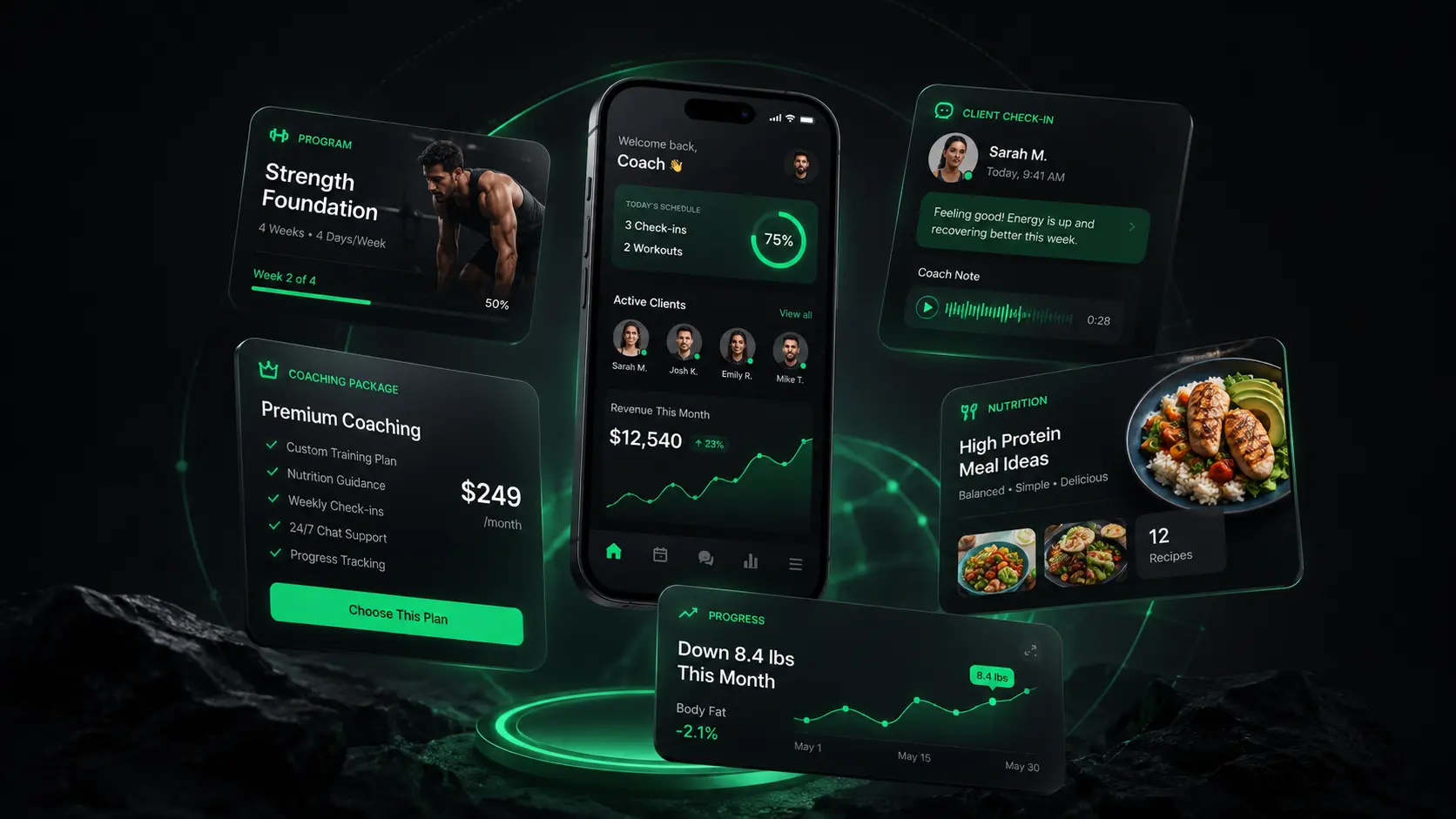
Many personal trainers and online coaches start by selling coaching without clearly defining what the client actually receives. The offer might sound broad, like online training or custom programming, but the client experience stays vague until someone asks a specific question.
A strong online fitness coaching offer is easier to explain, deliver and improve over time. When you know who the offer is for, what is included and how it reaches the client, marketing conversations and onboarding become more straightforward.
The offer should connect your niche, client goal, program structure, support level, content scope and delivery method into one coherent package. Tools come after that clarity, not before it.
This guide walks through how to create an online fitness coaching offer step by step, from target client and problem definition through program design, support boundaries, delivery and client experience.
Why your coaching offer needs to be specific
A vague fitness coaching offer is hard for clients to understand and hard for you to deliver consistently. If the offer only says coaching or online training, prospects may not know whether they are buying a program, ongoing support, nutrition content or something else entirely.
Specificity makes marketing, sales and delivery easier. When the offer explains who it is for and what kind of experience the client receives, you spend less time re-explaining basics on every call.
A clear offer also helps you choose the right tools. The offer comes before the app, website or marketing campaign. If you build tools first, you may end up shaping the offer around what the tool does instead of what the client needs.
Think of the offer as the blueprint for the client journey. An online coaching platform or personal trainer app can support that journey, but only after you define what the journey should include.
Choose the client your offer is built for
A useful online coaching offer starts with a target client, not a list of features. You cannot build one perfect offer for every fitness goal, experience level and lifestyle at the same time.
Choosing a specific client helps shape the program, language, content depth and delivery style. The same training principles can be packaged very differently for a beginner who needs structure versus a busy professional who needs simple sessions.
Common examples include beginners who need structure, busy professionals who need efficient training, gym members who need a program to follow between sessions, remote clients who need guidance without in-person access, clients focused on strength training and people returning to training after a break.
A niche does not guarantee sales. It simply makes the offer easier to position, explain and refine. If you are building a wider business foundation, How to Build a Digital Fitness Coaching Business covers how offer clarity fits into longer-term planning.
Define the main problem your offer solves
Clients usually buy coaching because they want a clearer path, not just a list of workouts. They may know they want to get fitter, but they do not always know what to train, how often or how to stay consistent without structure.
Common problems include not knowing what to train, lacking structure, needing accountability, wanting help following a plan, needing exercise guidance and wanting a more organized fitness routine.
Your offer should describe how it addresses those problems through program design, support and delivery. Focus on the system and support you provide rather than promising a guaranteed transformation.
Honest problem framing builds trust. Clients appreciate knowing what the offer helps with and what still depends on their effort, schedule and consistency outside the sessions you can directly control.
Decide what type of coaching offer you are creating
Not every online fitness coaching offer looks the same. Common types include a ready-made workout program, a personalized workout program, an online coaching package, a hybrid coaching offer, group coaching, app-based program delivery and gym member support programs.
Each type needs a different level of support, personalization and delivery structure. A downloadable program requires less ongoing communication than high-touch remote coaching with regular review.
Match the offer type to your capacity and client expectations. If you plan to sell workout programs online as products, the support model may be lighter than for full coaching packages.
App-based delivery can fit several offer types when you want structured workout program delivery on mobile. The offer type should drive that decision, not the other way around.
Online coaching offer components
Before you build the full program, it helps to see the main parts of an online coaching offer in one place. Use this table as a quick reference while you define each component.
Build the program structure
The training part of your fitness coaching offer should be clear enough for clients to understand what they get. Ambiguity here creates support messages before the first workout is even completed.
Define program length, weekly training frequency, workout split, session length, exercise order, sets and reps, progression logic, equipment needed, training notes and whether program updates are included.
A strong program structure makes the offer easier to deliver and easier for clients to follow. Clients should know how many days they train, what each session focuses on and how the plan progresses over time.
Whether you deliver through files, messages or workout and program delivery in an app, the structure should stay consistent. Good structure supports digital fitness coaching, but it does not replace clear communication about expectations.
Add exercise guidance to support client execution
Online clients often train without you next to them. Exercise names alone may not be enough, especially for less familiar movements or when equipment alternatives are needed.
Video guidance and written instructions help clients revisit what they need before or during a session. Guidance works best when it sits close to the workout, not scattered across random links or old message threads.
Organized exercise video guidance supports understanding and consistency for remote clients. It does not replace live form correction, injury prevention advice or medical safety guidance.
Set realistic expectations in your offer. Guidance helps clients follow the plan with more confidence. It supports the coaching experience without implying perfect technique on every rep.
Decide what nutrition content belongs in the offer
Not every online coaching offer needs nutrition content. Some coaches keep food guidance separate or focus only on training. That is a valid choice when it matches your qualifications and scope.
When nutrition is included, it may take the form of recipes or meal ideas rather than detailed diet planning. Nutrition support should match what you are qualified to provide and what you are willing to maintain consistently.
Be careful not to overpromise nutrition outcomes. Practical recipes and meals can complement training without turning the offer into macro tracking, calorie counting or automated meal plan generation.
CoachSuit supports recipes and meals as nutrition content inside the app experience. Define nutrition scope clearly in your offer so clients know what is included and what is not.
Define the support and communication model
Support level changes the offer, your workload and what clients expect from you. Common models include self-guided programs, limited support, scheduled check-ins, direct message support, progress review, hybrid support and high-touch coaching.
More support usually means more operational work. Define support clearly so the offer stays sustainable as client numbers grow.
Specify how often clients can expect review, what channels you use and what is outside scope. Boundaries protect your time and prevent misunderstandings about unlimited access.
Choose support based on the offer type and price positioning you are building. A self-guided program seller needs a different communication model than a coach running weekly review calls with remote clients.
Choose the delivery method
Delivery method shapes the daily client experience. PDFs can work for simple static guides but are limited for ongoing coaching that needs updates and connected guidance.
Spreadsheets offer flexibility for planning but can feel manual and less polished for clients on mobile. Messages are strong for communication, yet workouts and instructions can get buried in conversation history.
A branded app can provide better structured mobile delivery. It can organize programs, guidance, recipes and recorded progress in one place when you care about brand experience and repeatability.
For a deeper comparison of delivery options, see Best Way to Deliver Workout Programs to Clients Online, Online Coaching App vs PDFs and WhatsApp and Branded Fitness App vs Generic Coaching App. A fitness mobile app or branded fitness app may fit when your offer needs more structure than files and messages provide.
Make the offer easy to explain
A good online coaching offer should be simple enough to explain in a few sentences. If you need ten minutes to describe what the client gets, the offer may still be too broad.
Use a simple framework: For [target client], this offer provides [program or support] so they can [desired direction] through [delivery method and support level].
Example without guarantees: For busy professionals who want more training structure, this 8-week coaching offer provides gym-based workouts, exercise guidance and progress review through a branded mobile app experience.
Practice explaining the offer on a sales call, in a bio or on a landing page. Clarity here improves conversion conversations because prospects understand the package before they ask about tools or pricing.
Think through onboarding
Onboarding is part of the product experience. A client should understand what happens after they buy or join, not discover the workflow through trial and error.
Cover what they receive first, how they access workouts, where they find exercise guidance, how progress is recorded, when support happens, what they should prepare and how the first week works.
A smooth first week reduces early drop-off and repeated support questions. Send or show clients exactly where to start, what to complete first and how to reach you if something is unclear.
Onboarding also sets the tone for the relationship. Organized first steps signal that the coaching offer is structured, even when support is mostly self-guided.
Decide how progress will be reviewed
Progress visibility helps you and the client understand what is happening between conversations. It can include training history, completed workouts, logged activity or logged weight depending on your setup.
Progress review should connect to the offer, not exist as a separate dashboard clients never use. If you promise review during check-ins, the delivery method should make that review straightforward.
Useful client progress tracking supports organization and accountability. It does not guarantee results, retention or transformation.
Define how often you review progress and what you expect clients to log. Clear expectations prevent both over-logging and silence when you need data for a meaningful check-in.
Common mistakes when creating an online coaching offer
Many coaches stumble on the same patterns when moving online. Recognizing these early can save months of rework.
- Creating the app before defining the offer: tools should support a clear package, not define it
- Trying to serve everyone: broad offers are harder to explain and harder to deliver well
- Selling workouts without explaining the client experience: prospects need to know how coaching actually works day to day
- Adding too many features too early: start with a focused offer you can deliver consistently
- Not defining support boundaries: unclear access creates burnout and client frustration
- Overpromising outcomes: focus on structure and support rather than guaranteed transformation
- Making delivery too manual: scattered files and messages create friction as clients grow
- Ignoring onboarding: the first week shapes whether clients feel confident in the offer
- Not explaining what happens after purchase: confusion at signup undermines trust immediately
- Using tools that do not match the coaching model: delivery should fit how you actually work
Online fitness coaching offer checklist
Use this checklist when drafting or reviewing your online fitness coaching offer. It helps confirm that positioning, delivery and client experience align before you launch or scale.
- Target client
- Main client problem
- Offer type
- Program length
- Weekly training structure
- Exercise guidance
- Nutrition content if included
- Support level
- Communication boundaries
- Delivery method
- Onboarding steps
- Progress visibility
- Branding and presentation
- Pricing model
- Launch plan
Where CoachSuit fits
CoachSuit is built for trainers, online coaches and gyms that want a branded mobile app experience for delivering selected fitness content. Depending on modules, it can support workouts, programs, exercise guidance, recipes, meals and recorded progress.
It can help coaches deliver a clearer app-based client experience instead of scattered files and messages. That is useful when you already have or are actively building a defined online coaching offer.
CoachSuit may not be necessary for someone who only needs a simple PDF, spreadsheet or fully manual setup. In those cases, a full branded app may be more than you need right now.
CoachSuit includes initial design personalization and launch support, with ongoing maintenance and priority support available through CoachSuit Club. A typical launch takes 2-4 weeks depending on modules, content preparation and feedback speed.
Explore CoachSuit for personal trainers, the wider online coaching platform direction, pricing and launch options or book a free demo to discuss your coaching model and app modules.
Final takeaway
A strong online fitness coaching offer is built from the client outward. Start with the target client, the main problem, program structure, support level and delivery method before you invest heavily in tools or marketing.
Tools should support the offer, not define it. PDFs, spreadsheets and messages can work for simple packages. A branded app can help when you want a more structured mobile client experience with programs, guidance and recorded progress in one place.
Keep refining the offer as you deliver it. Client questions, onboarding friction and support patterns will show you what to clarify next. A defined offer makes those improvements easier to make.
Online fitness coaching offer FAQ
- What should an online fitness coaching offer include?
- An online fitness coaching offer should clearly explain who it is for, what the client receives, how long it lasts, what support is included, how the program is delivered and how progress is reviewed.
- How do I create an online coaching offer as a personal trainer?
- Start with a specific target client, define the main problem your offer solves, create a structured training program, decide your support model and choose a delivery method that clients can follow easily.
- Do I need an app for my online coaching offer?
- Not always. PDFs, spreadsheets and messages can work for simple offers. An app becomes more useful when you need structured delivery, mobile access, exercise guidance, progress visibility and a branded client experience.
- Can CoachSuit help deliver an online coaching offer?
- CoachSuit can support online coaching by delivering workouts, programs, exercise guidance, recipes, meals and recorded progress through a branded mobile app experience, depending on selected modules.
- Can I include nutrition in my coaching offer?
- Yes, if it fits your qualifications and scope. CoachSuit supports recipes and meals as nutrition content. It is not presented as a meal plan generator, calorie tracker or macro tracking tool.
- Does CoachSuit process payments for coaching offers?
- Payment processing is not presented as a verified standard capability on this site. CoachSuit focuses on the branded app experience for delivering selected fitness content and supporting the client journey.
Ready to turn your coaching offer into a branded app experience?
Book a free CoachSuit demo to discuss your coaching model, app modules, branding direction and launch options.
Book a free demo